
Japanese to English Document Translation requires more than simple word swaps; it demands a deep understanding of how non-Latin characters interact with fixed document margins and table cells.
Why Legal Teams Need Japanese to English Document Translation
When you shift from Japanese source materials to English, the objective is to ensure that the translated file functions as a mirror of the original, providing a clear path for legal review and subsequent sign-off without needing manual re-formatting.
Business Risk and Approval Context
In global litigation or contract negotiation, a document that loses its structure is a document that loses its evidentiary value. You face significant risks if your translation process obscures critical clauses, misaligns exhibit headers, or fails to capture the nuance of Japanese honorifics translated into formal English legal terminology. Automated, layout-aware systems mitigate this by anchoring translated text within the existing grid of your source document, ensuring that your final, translated version remains accessible to stakeholders who rely on the original layout for quick reference.
Where File Complexity Creates Rework
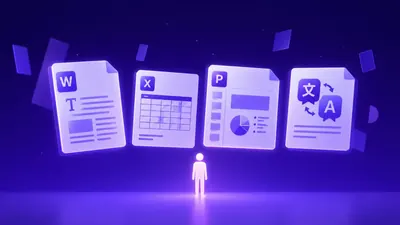
Complex files often contain nested tables, embedded images, and specific font requirements that break during manual conversion. If your team relies on copy-pasting text from a PDF or spreadsheet, you inevitably spend hours fixing broken cells and re-aligning text blocks. Using an automated document translation platform allows your team to skip the structural cleanup phase entirely, as these tools preserve the underlying file architecture of Word, Excel, and PowerPoint files regardless of the linguistic complexity involved in switching from ja-JP to en-US.
| Feature | Manual Translation | Traditional OCR | Doctranslate.io |
|---|---|---|---|
| **Layout Integrity** | Poor | Mixed | High |
| **Speed** | Slow/High Labor | Medium | Instant |
| **File Support** | Single Format | Text Only | Multi-Format |
Legal Pain Points
Managing cross-lingual legal documentation involves balancing the speed of technology with the rigid requirements of the courtroom or boardroom. You must ensure that the transition from a dense Japanese report to a concise English brief does not create a disconnect between the data and the underlying evidence.
Format and Number Integrity
Tables in Japanese financial reports often present data in unique structures that, if disrupted during translation, lead to catastrophic interpretation errors. You need a system that recognizes cell constraints and handles number formatting—such as localized currency symbols and date formats—without collapsing the surrounding borders or shifting your decimal points. Preserving the exact grid layout is the primary defense against the common frustration of "lost-in-translation" data.
Reviewer Ownership and Handoff
When your team hands off a document for review, the process must be frictionless. If the reviewer has to spend time validating whether the translation correctly mapped to the original PDF structure, the Handoff period drags on, delaying your project timelines. By implementing a standardized conversion process, you establish a consistent baseline for quality, allowing your reviewers to focus exclusively on the linguistic accuracy and legal terminology rather than the integrity of the document’s layout.
For the practical workflow, Japanese to English Document Translation with Doctranslate.io keeps the source file, target output, and review step in one place.
How Document Translation Fits the Legal Workflow
Integrating high-accuracy translation tools directly into your existing infrastructure reduces the friction between initial intake and final filing. Teams that adopt a systematic approach to translation avoid the bottleneck of individual document handling, creating a predictable path for every file that crosses their desk.
Product Fit for the Core Workflow
xlsx` for financial disclosure. By utilizing specialized translation software, you maintain the fidelity of the document, ensuring that the final file looks and feels like the original. This software supports over 100 languages, meaning your team has the scalability to handle Japanese documents today and adapt to new regional requirements as your legal practice expands.
Review Controls Before Delivery
Before a file ever hits a court file or a client's inbox, your internal team needs to exert control over the quality. You can manage this by selecting specialized glossaries that define how technical legal terms are handled, ensuring that the translation reflects your organization's specific preference for tone and terminology. This proactive adjustment period turns the raw output into a polished product, significantly reducing the amount of post-production editing required by your staff.
Real Use Cases in Legal
Legal teams often encounter unique scenarios where standard translation methods fail to meet the high threshold required for evidence. Identifying these high-value cases helps you decide where to deploy your most robust translation resources for the best results.
High-Value Team Scenarios
Corporate legal teams frequently process Japanese shareholder meeting minutes, internal investigation records, and compliance manuals that must be converted for U. -based stakeholders. In these cases, the legal team requires a high level of fidelity to ensure that specific, named entities and corporate policies remain identical across languages.
Using high-precision tools ensures that these documents remain compliant with internal audit standards while saving hundreds of staff hours that would otherwise be lost to re-formatting.
Where Manual Review Still Matters
While automation serves the bulk of the heavy lifting, human review remains the final layer for nuance and context-sensitive interpretation. Your team should always reserve time for senior counsel to verify the translation of highly ambiguous phrases or specialized legal jargon where the difference between two near-synonyms could alter the meaning of a contract. Automating the technical and structural components of the job frees up your experts to dedicate their time only to the sections of the document that truly demand human insight.
ROI for Legal Teams
Calculating the return on investment for your translation strategy involves looking at both the hourly cost of your legal team and the opportunity cost of delayed project delivery. By reducing the time spent on administrative re-formatting, you directly improve your profit margins on billable projects and internal compliance tasks.
Time Savings and Cleanup Reduction
The most immediate benefit is the elimination of the "clean-up" phase. When your team receives an accurately translated, perfectly formatted document, they move straight to the substantive review phase. This efficiency shift is measurable, as firms moving from manual conversion to automated, layout-preserving tools often report that they can cycle through multiple document iterations in the time it previously took to manage one.
Budget Impact and Review Effort
When you eliminate the need for third-party document specialists to re-align your tables and margins, you lower your total cost per project. By focusing your budget on a reliable tool that handles the complex layout requirements, you create a more predictable and scalable cost structure. This allows you to scale your translation capacity based on incoming volume without having to scale your overhead costs proportionally.
The Bottom Line
Effective Japanese to English Document Translation is about balancing the need for speed with the absolute requirement for accuracy and structural integrity. By automating the technical aspects of document conversion, your legal team can reclaim thousands of hours, reduce the risk of formatting errors, and ensure that every file is ready for professional review. For teams ready to modernize their workflow, Doctranslate.io provides the precision and scalability needed to handle complex document translation projects at scale.
Start with Doctranslate.io Document Translation when the next file needs a reviewed, ready-to-share output.





Discussion
No comments yet