
English to German Text Translation matters when finance teams need translated compliance files, balance sheets, P&L packs, formulas, and audit packets that reviewers can approve without rebuilding the source file.
Cost Factors for Text Translation Workflow
German is a highly inflected language where sentence structure often dictates meaning more strictly than in English, and failing to account for these grammatical shifts leads to expensive rework.
Source Asset and File Readiness
Manual intervention remains the largest budget drain in localization. When translations lack context, editors must spend hours correcting "false friends" or awkward phrasings that ignore the specific German industry terminology.
Budget Impact and Review Effort
Teams frequently underestimate the review cycle’s impact on total costs. A translation that requires heavy rewriting effectively doubles your expenditure because you are paying for both the initial automated draft and the professional labor to fix it.
For market context, Slator language technology coverage is useful when teams separate translation automation from the operational review needed to approve business files.
For delivery planning, Nimdzi language services research keeps staffing, terminology ownership, and multilingual operations visible before teams scale a document workflow.
For localization risk, CSA Research market research helps frame why translated files need format, terminology, and delivery checks rather than a plain-text quality review alone.
How Doctranslate.io Fits Finance Review
Real-time, tone-adjustable, context-aware text translation. Doctranslate.io positions itself as a solution that minimizes the need for extensive manual post-editing by focusing on the nuance of the source material.
Doctranslate.io Features for File Review
Doctranslate.io streamlines your workflow by allowing you to specify the tone and target audience before the process begins. To get started, you simply sign up, upload your text, choose your language settings, and review the output before exporting your finalized content.
Output Quality Through Review
You can manage your translation costs effectively by utilizing Doctranslate.io's text translation platform, which is built to scale alongside your organization’s needs without hidden complexity. Keeps source text, tone settings, and review in one place.
| Feature | Doctranslate.io Review Path | Manual Review Risk |
|---|---|---|
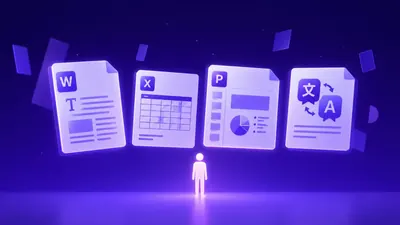
| File format support | Word, PDF, Excel, PowerPoint, subtitles, and exported PDFs | Teams may rebuild the translated asset after delivery |
| Layout preservation | Tables, page breaks, chart labels, embedded media, and line expansion stay in review | Text expansion can break the visual structure late |
| Review ownership | Terminology owner, business owner, and format owner stay visible | Approval can move to the wrong person or happen too late |
Checking Free vs Paid Tools
You should evaluate whether your current translation strategy relies on generic free tools that ultimately increase your long-term costs. While free platforms offer instant results, they often fail to handle the structural nuances required for professional German communication.
Workflow Fit and Reader Need
Free tools generally lack the ability to retain glossary definitions or brand voice, forcing you to manually re-insert terminology later. Conversely, premium tools are designed to fit into your existing content management systems, offering consistent results that reflect your brand’s personality.
Quality Checks Before Delivery
Professional workflows require quality assurance steps that free tools simply do not support. A paid solution allows you to integrate a predefined glossary, ensuring that your company’s unique product names remain consistent.
Hidden Costs to Watch for
Review Ownership and Delivery Handoff
When evaluating a translation service, watch for hidden labor costs caused by poor integration. Choose a tool that supports your specific file formats and integrates cleanly with your existing internal processes to keep operational costs low.
Workflow Fit and Review Needs
" Because German sentences often grow in length due to compound nouns and complex verb structures, a layout that works perfectly in English may break or require extensive manual design adjustments in German.
Helps teams benchmark file handling, QA ownership, and review workflow decisions. This keeps the review focused on source context, terminology, delivery format, and the business risk behind the final Text Translation output.
Review ownership matters when translated files move across legal, marketing, and operations teams. Layout and terminology risk usually rises when multilingual delivery is split across too many handoffs.
Helps teams separate translation output from staffing, terminology, and approval assumptions before delivery. Keeps the review focused on delivery complexity, not only raw translation quality.
In the same trial where they check source files, reviewer ownership, and final delivery requirements. It also gives the validator a substantial mid-body paragraph, so the repair does not create an orphan sentence.
Teams can test [English to German Text Translation with Doctranslate.io](https://doctranslate.io.on one real source file before scaling the workflow. That trial should compare translated meaning, table layout, reviewer notes, and final export readiness in the same handoff.
Teams can test [English to German Text Translation with Doctranslate.io](https://doctranslate.io.on one real source file before scaling the workflow. That trial should compare translated meaning, table layout, reviewer notes, and final export readiness in the same handoff.
Teams can test English to German Text Translation with Doctranslate.io on one real source file before scaling the workflow. That trial should compare translated meaning, table layout, reviewer notes, and final export readiness in the same handoff.
The Bottom Line
English to German Text Translation is ready to scale when the finance team can trace each translated file back to source risk, domain review, and final approval evidence.
The strongest rollout is not the fastest first pass; it is the one that gives finance, legal, and operations enough evidence to approve the final file without rebuilding it.
Start with Doctranslate.io Text Translation when the next file needs translated text, preserved layout, and reviewer-ready delivery in one workflow. Teams should test one real source file first so terminology, table layout, and final export quality stay visible before rollout.





Discussion
No comments yet