
Handling high-stakes English to Vietnamese Document Translation requires more than simple text conversion; it demands precision, security, and strict adherence to the formatting of original legal discovery or contract files.
Why Legal Teams Need English to Vietnamese Document Translation
Legal teams often experience bottlenecks when moving from English source files to Vietnamese counterparts, specifically because document structure often fails during standard copy-paste translation. Organizations must ensure that the translated file mirrors the original, as any shift in headers, footers, or evidentiary numbering can invalidate the document’s utility in a courtroom or regulatory setting.
Business Risk and Approval Context
When legal departments finalize documents for foreign partners, they carry the burden of liability if the translated version contains discrepancies. Misinterpreted contractual obligations or incorrect regulatory filing details present significant risks that could delay transactions or lead to costly litigation. Effective systems reduce this surface area by automating the mechanical aspects of file preparation, allowing the legal experts to focus entirely on the nuances of the translated text.
Where File Complexity Creates Rework
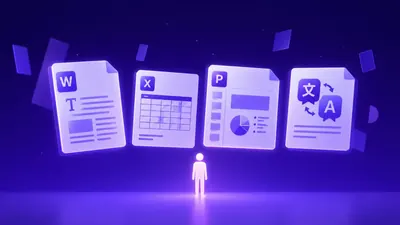
Complex documents such as legal briefs or multi-page discovery exhibits often involve embedded tables, specific font requirements, and rigid page breaks. Pdf reports. Choosing a platform that handles multi-format document migration ensures that the underlying structure of a case file remains untouched, effectively neutralizing the risk of metadata loss during the conversion process.
Legal Pain Points
Legal teams face recurring friction when their translation workflow forces them to choose between accurate text and functional document layout. Addressing these hurdles is essential for maintaining productivity in high-pressure environments where deadlines are rigid and the consequence of error is substantial.
Format and Number Integrity
Preserving the exact numbering systems, cross-references, and citation styles is a primary requirement for legal documentation. During an English to Vietnamese Document Translation, the software must recognize that certain numerical sequences—such as clause references or exhibit labels—should remain static even as the surrounding language shifts from an English Subject-Verb-Object structure to the more contextual Vietnamese phrasing. Losing these markers forces reviewers to perform redundant cross-checks, effectively doubling the time required for a final sign-off.
Reviewer Ownership and Handoff
Efficient handoffs between legal analysts and administrative teams require that every version of a document remains consistent across the chain of custody. If a translator uses a disparate tool that breaks the file structure, the resulting rework creates confusion about which version of the record is currently the "master" copy. Standardizing on a secure document translation service prevents these discrepancies by ensuring that the file returned to the reviewer is identical to the input in every visual and structural dimension.
For the practical workflow, English to Vietnamese Document Translation with Doctranslate.io keeps the source file, target output, and review step in one place.
How Document Translation Fits the Legal Workflow
Integrating professional-grade translation capabilities into your current legal software stack allows teams to bypass the manual formatting stage entirely. Instead of moving text between different applications, the workflow becomes a matter of direct document processing, where the file itself is the carrier of the content throughout the journey.
Product Fit for the Core Workflow
xlsx, the software provides a seamless transition for legal departments working with existing templates. When a document is uploaded, the system analyzes the file's internal hierarchy, identifying which segments contain translatable text and which segments (like logos or static graphical elements) must be preserved. This capability is vital for teams that handle hundreds of pages per week, as it eliminates the need for manual copy-pasting of translated content into the original document shell.
Review Controls Before Delivery
Maintaining control over the final output is a prerequisite for legal teams, as no automated process can replace final human scrutiny. The system supports a loop where the translation is generated, but the legal team retains full ownership of the final file export. By verifying the translation within the original layout, reviewers can identify potential issues—such as text overflow or font incompatibility—early in the process.
This controlled environment ensures that the end-user receives a polished, professional file that meets all internal compliance standards.
Real Use Cases in Legal
Applying automated translation to everyday legal tasks shows the stark difference between manual labor and optimized operations. In many international trade disputes or corporate mergers, the sheer volume of documentation makes manual translation an impossibility, necessitating a shift toward robust, high-speed automated solutions.
High-Value Team Scenarios
During cross-border intellectual property disputes, legal teams often handle large volumes of technical patents and evidentiary records. These documents are frequently highly structured, with specific annotations that must be preserved for the court to review. Using an automated tool that supports over 100 languages ensures that whether the evidence originates from a technical manual or an international agreement, the structure remains intact, allowing for easier side-by-side review during hearings.
Where Manual Review Still Matters
While automation handles the bulk of document processing, the human element remains irreplaceable for nuanced legal interpretation. Legal experts must always perform a final review of the generated content to ensure that terminology is consistent with local Vietnamese legal precedent. While the system manages the heavy lifting of layout and structure, it functions as a force multiplier for the legal team, allowing them to focus their limited billable hours on high-level analysis rather than mechanical formatting.
ROI for Legal Teams
Investing in the right translation technology yields direct savings by lowering the administrative burden and allowing the firm to scale its operations without a linear increase in overhead. When teams no longer have to spend time fixing document formatting, the cost of translation drops while the capacity for handling new cases increases.
Time Savings and Cleanup Reduction
Automated systems drastically reduce the time spent on "document cleanup" after a translation is completed. When a system natively handles the complexities of a 50-page PDF, the legal assistant's workload shifts from hours of manual editing to a few minutes of final verification. This gain is amplified as teams process more documents, resulting in significant time savings across a fiscal quarter.
Budget Impact and Review Effort
Reducing the internal effort required to prepare, translate, and reformat documents lowers the total cost of ownership for legal services. By choosing a solution that minimizes the need for external formatting agencies, legal departments can redirect their budget toward higher-value initiatives. The reduction in manual touchpoints also directly contributes to fewer administrative errors, lowering the risk profile associated with cross-border legal communication.
The Bottom Line
Effective English to Vietnamese Document Translation is a cornerstone of modern international legal strategy, providing the necessary infrastructure to manage cross-border information without sacrificing quality. By automating the preservation of document layouts across common file formats, legal teams can eliminate manual formatting bottlenecks and reduce operational costs. To see how your firm can integrate these capabilities, explore the document translation features available at Doctranslate.io and begin standardizing your cross-language legal workflows today.
Start with Doctranslate.io Document Translation when the next file needs a reviewed, ready-to-share output.





Discussion
No comments yet