
Why English to Korean Presenter is challenging
Translating English content into Korean for presentations often involves multiple steps that can introduce friction. The initial source material, frequently in documents like .docx or .pdf files, must be extracted and then translated. Formatting needs to be preserved, which can be difficult when moving between different file types or platforms. Review cycles with Korean-speaking professionals are essential to ensure accuracy and cultural appropriateness, adding time and potentially increasing costs. The overall process can be complex and time-consuming, hindering the creation of effective presentations.
What makes a good Presenter workflow
An ideal workflow for creating English to Korean presentations prioritizes efficiency and quality. This involves using tools that can handle various file formats (.docx, .pdf, .pptx) and maintain the original formatting during the translation process. The workflow should incorporate a robust review process, allowing Korean-speaking reviewers to check the translated content for accuracy and cultural relevance. Good workflows often include clear responsibilities, with defined roles for translators, reviewers, and project managers. The use of language codes, such as "en" for English and "ko" for Korean, ensures proper language identification and handling throughout the process.
A well-defined process also minimizes the risk of errors and inconsistencies.Read more about translation workflow best practices.
For the practical workflow, English to Korean Presenter with Doctranslate.io keeps the source file, target output, and review step in one place.
How Doctranslate.io handles English to Korean Presenter
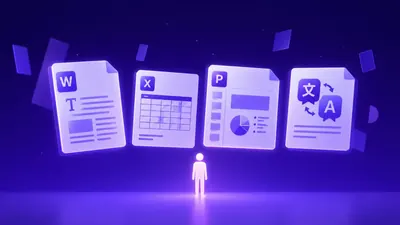
Doctranslate.io streamlines the Presenter workflow process with its innovative features. Its core strength lies in its ability to convert a PDF report to presentation deck automatically. This removes the need for manual copy-pasting and formatting adjustments, saving valuable time. This direct conversion capability ensures that the core information from the source document is accurately translated and presented in a visually appealing format.
The product's ability to maintain layout and formatting during the conversion process is a key advantage. Instead of manually recreating the presentation, the user can upload a PDF and receive a ready-to-use presentation deck in Korean. Doctranslate.io’s functionality provides a significant boost in productivity, allowing users to focus on the content rather than the technical aspects of presentation creation. You can learn more about this by visiting the this workflow tool.
Step-by-step guide for Presenter
Creating English to Korean presentations using Doctranslate.io is a straightforward process.
- Sign up: Start by creating a free account at https://doctranslate.io (no credit card required). This provides access to the Presenter tool and other features.
- Upload/Paste: Upload your source document (typically a PDF report) directly into the Presenter interface, or paste the text. Doctranslate.io supports various file formats, making it flexible for different use cases.
- Download/Copy: Once the translation and conversion are complete, download the presentation deck in a format ready for use (e.g., .pptx), or copy the result. The output will be a presentation deck in Korean, preserving the original layout and formatting.
Use cases for Presenter
Here are several scenarios where Doctranslate.io can be beneficial:
- Business Presentations: Quickly create presentations for Korean-speaking clients or partners from English reports, saving time and resources.
- Marketing Materials: Translate marketing reports and create engaging presentations for the Korean market, ensuring effective communication of product benefits.
- Training Materials: Convert training manuals and reports into Korean presentations for employee training or customer education programs.
- Investor Relations: Prepare investor presentations in Korean for meetings with Korean investors, ensuring clarity and impact.
A reliable process should define the input asset, reviewer role, acceptance criteria, and deadline before work begins. That keeps the Doctranslate.io setup focused on a concrete handoff instead of a generic content task.
A useful review checklist should cover names, numbers, terminology, formatting, and delivery readiness. These checks give teams a clear quality bar without repeating the same workflow advice in every section.
The file preparation step should preserve source structure before any language work starts. Teams should collect the latest approved file, confirm the target audience, and note any terms that must stay unchanged.
The review step should be assigned to a person who understands both the business context and the target-language audience. That reviewer can approve tone, terminology, visual layout, and final delivery readiness in one pass.
The handoff step should make the final output easy to reuse. A clean export, clear filename, and short approval note help downstream teams know which version is ready for sales, training, or client delivery.
The workflow should also record decisions that affect future projects, such as preferred terminology, file-format constraints, and recurring layout issues. Those notes reduce rework when the next source file follows the same pattern.
Slator language technology reports track how language and localization teams evaluate automation by accuracy, review control, speed, and production readiness.
For governance, the team should keep one owner for the source asset and one owner for final approval. That prevents duplicate edits and makes it clear which version is ready for customers or internal teams.
For quality control, reviewers should compare the generated output against the original structure, not just the translated wording. Layout, speaker notes, tables, charts, and embedded labels can all change how the message is understood.
For delivery, the workflow should end with a reusable file and a short note about what was checked. This makes the next project faster because the team already knows which terminology, format, and review pattern worked.
For recurring work, teams should save preferred terminology and presentation rules before the next file arrives. A small glossary and a clear export convention reduce avoidable cleanup across future projects.
For stakeholder alignment, teams should agree on who can request changes after the first generated version. A clear change owner keeps review cycles short and prevents late edits from breaking layout or terminology.
The Bottom Line
The bottom line: define the source asset, reviewer, approval criteria, and delivery format before the work starts. Presenter gives teams a practical way to keep generation, review, and final handoff connected.
Start with Doctranslate.io Presenter when the next file needs a reviewed, ready-to-share output.





Discussion
No comments yet