
Why Teams Struggle with AI Document Translation Workflow
Traditional document translation processes often involve multiple manual steps, leading to delays and inefficiencies. The complexity of these workflows can be a significant hurdle for teams aiming to quickly adapt content for international audiences.
The Time-Consuming Nature of Manual Translation
Manual translation is inherently time-consuming. It involves human translators reading, understanding, and re-writing content in another language. This process can take hours or even days, depending on the document's length and complexity. The more documents your business needs translated, the more this time adds up. Delays are further exacerbated by the need for project management, file transfers, and communication with translators, which is a drain on resources.
Formatting and File Type Challenges
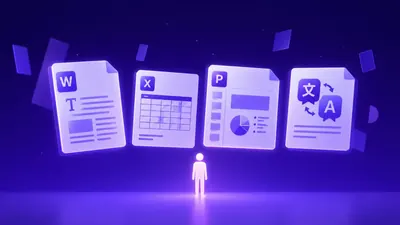
Maintaining the original formatting across different file types is another common struggle. Documents come in various formats, such as Word, PDF, Excel, and PPT. Each file type presents unique challenges for layout preservation during translation. Inaccurate formatting can lead to unprofessional-looking translated documents that require extra revisions, slowing down the process and increasing costs.
Lack of Workflow Integration
Inefficient workflows often arise when translation tools are not integrated with existing systems, such as content management systems (CMS) or project management platforms. This lack of integration necessitates manual file transfers, which introduces delays and increases the risk of errors. Without seamless integration, project managers spend valuable time coordinating translations instead of focusing on strategic initiatives.
Quality Control and Terminology Inconsistencies
Quality control issues and inconsistent terminology can undermine the effectiveness of translated documents. Without robust quality assurance processes, errors can slip through, leading to confusion and miscommunication. Moreover, inconsistent terminology can create confusion and dilute your brand's message.
What Makes a Good Document Translation Workflow
An effective Document Translation workflow streamlines the process, ensuring accuracy, efficiency, and cost-effectiveness. A well-designed workflow simplifies document translation, allowing businesses to communicate effectively with their global audience.
Seamless File Handling
A good this workflow must support various file formats, including Word, PDF, Excel, and PPT. This flexibility allows users to translate documents directly without needing to convert them to other formats. The ability to handle diverse file types is crucial for maintaining the original layout and formatting during translation.
Integration with Machine Translation Engines
Integration with robust machine translation (MT) engines is a core requirement. These engines provide the initial translation, which can then be refined through post-editing. The MT engine should support a wide range of language pairs to meet the diverse needs of global businesses.
Terminology Management and Glossary Integration
Effective terminology management is critical for maintaining consistency and accuracy. A good workflow should integrate with terminology management systems and allow for glossary integration. This ensures that specific terms are translated consistently throughout the document, preserving the intended meaning and tone.
Human-In-The-Loop Review and Post-Editing
Human review and post-editing are essential for ensuring the quality of the translated documents. This step involves a human translator reviewing and refining the output from the MT engine. Human review catches errors that the MT engine might miss, such as nuances in language, cultural references, and context-specific terminology.
Automation of Repetitive Tasks
Automation of repetitive tasks, such as file uploads and format handling, is a key characteristic of an efficient workflow. By automating these tasks, businesses can reduce manual effort and accelerate the translation process. Automated workflows also minimize the risk of human error, leading to more accurate translations.
For the practical workflow, AI document translation workflow with Doctranslate.io keeps the source file, target output, and review step in one place.
How Doctranslate.io Handles AI Document Translation Workflow
Translates Word/PDF/Excel/PPT preserving layout, 100+ languages. Doctranslate.io offers a comprehensive AI-powered platform to streamline your document translation process. It addresses the challenges of traditional methods by providing a user-friendly and efficient solution.
AI-Powered Automation with Layout Preservation
Doctranslate.io's AI-powered platform automates document translation while preserving the original layout and formatting. This ensures that the translated documents look professional and are easy to read. You can translate Word, PDF, Excel, and PPT files seamlessly.
Extensive Language Support
Doctranslate.io supports over 100 languages, allowing businesses to communicate with a global audience. This wide range of language options makes Doctranslate.io a versatile solution for companies with diverse translation needs.
System Integration via Apis
Doctranslate.io integrates with existing systems through APIs, which simplifies the translation process by eliminating the need for manual file transfers. This integration streamlines the workflow, saving time and reducing the risk of errors.
User-Friendly Interface
Doctranslate.io features a user-friendly interface that makes it easy to upload, manage, and translate documents. Its intuitive design reduces the learning curve, so users can quickly get started with their translation projects.
Human Review and Post-Editing
Doctranslate.io offers options for human review and post-editing, ensuring the highest quality translations. This feature allows businesses to refine the MT output and tailor it to specific needs.
Focus on Speed and Accuracy
Doctranslate.io prioritizes both speed and accuracy. The platform's AI-powered translation capabilities and streamlined workflow deliver fast, precise results, enabling businesses to meet tight deadlines without compromising quality.
Doctranslate.io's approach to document workflow helps businesses overcome the challenges of traditional methods by providing a streamlined, efficient, and accurate solution. The platform's features are designed to simplify the translation process, making it accessible and easy to manage.
Step-By-Step Guide for Document Translation Workflow
Using Doctranslate.io’s platform is a straightforward process. Here’s a step-by-step guide to get you started:
1. Upload Your Document
Begin by uploading your document to the Doctranslate.io platform. Doctranslate.io supports various file formats, including Word, PDF, Excel, and PPT. The platform automatically handles the file format, preserving the original layout.
2. Select Source and Target Languages
Choose the source language of your document and the target language for the translation. Doctranslate.io supports over 100 languages, ensuring you can reach your target audience.
3. Choose MT Engine
You can select the MT engine that best fits your needs, or you can use Doctranslate.io's default engine. This step allows you to customize the translation process based on your specific requirements.
4. Review and Edit (Optional)
After the translation is complete, you have the option to review and edit the document. This step is crucial for ensuring accuracy and quality, especially for critical documents.
5. Download Translated Document
Download the translated document in its original format. Doctranslate.io preserves the layout, so the translated document looks as professional as the original.
This step-by-step guide illustrates how easy it is to use Doctranslate.io for your the Doctranslate.io setup. The process is designed to be user-friendly, allowing you to translate documents quickly and efficiently.
Use Cases for Document Translation Workflow
AI document translation workflows have a wide range of applications across various industries and business functions.
Translating Marketing Materials
Businesses use AI document translation workflows to translate marketing materials for global campaigns. This includes brochures, website content, social media posts, and advertising copy. This ensures that the marketing messages resonate with local audiences, increasing engagement and conversion rates.
Localizing User Manuals and Documentation
Companies use AI document translation workflows to localize user manuals and documentation for international customers. This helps customers understand how to use products and services, improving customer satisfaction and support.
Translating Legal Contracts and Agreements
Legal teams use AI document translation workflows to translate legal contracts and agreements. This ensures that all parties understand the terms and conditions, reducing the risk of misunderstandings and disputes.
Translating Internal Communications
Multilingual teams use AI document translation workflows to translate internal communications, such as memos, announcements, and training materials. This helps improve internal communication and collaboration, fostering a more inclusive workplace.
Translating Training Materials
Businesses utilize AI document translation workflows to translate training materials and e-learning content. This allows employees from different regions to access the same information, ensuring consistency and compliance across the organization.
These use cases demonstrate the versatility of AI document translation workflows, highlighting their value in various business functions.
Slator language technology reports track how language and localization teams evaluate automation by accuracy, review control, speed, and production readiness.
For setup, teams should define the source file, target audience, language direction, and any terms that must stay unchanged. This keeps the document workflow focused on the real business moment instead of producing a generic output.
For quality control, teams should check layout, terminology, numbers, and delivery readiness. These checks are concrete enough for a reviewer to approve or reject the formatted multilingual output without rereading the whole project brief.
For comparison, a strong option should reduce manual cleanup while still leaving room for human approval. That balance matters when the result will be used in sales calls, training, customer support, legal review, or executive communication.
For rollout, teams should decide who owns the final review, where the approved result is stored, and what format downstream teams need. That prevents late changes from breaking terminology, timing, formatting, or meeting notes.
For recurring work, teams should save preferred terminology, language-pair choices, and review rules after the first successful run. The next project then starts from known decisions instead of repeating setup work.
Before procurement, the team should test one realistic example instead of a polished demo. A real source file reveals whether the document workflow can handle accents, formatting, timing, terminology, and approval needs that appear in day-to-day work.
The Bottom Line
The bottom line: Document Translation workflow works best when teams define the source file, layout requirements, terminology, numbers, and approval rules before delivery. Document Translation should support that plan without adding unnecessary cleanup or review loops.
Start with Doctranslate.io Document Translation when the next file needs a reviewed, ready-to-share output.





Discussion
No comments yet