Direct answer: In 2026, implementing ai document translation: a 2026 guide for operations teams effectively requires an automated, end-to-end document translation pipeline that eliminates manual transcription errors, guarantees multi-column visual layout geometry preservation, and enforces strict terminology governance across corporate assets. Modern enterprise workflows combine neural recognition and parsing engines with automated validation checks to deliver publication-ready results without formatting degradation.
Manual localization processes often fail because standard tools cannot distinguish between structural layout elements and actual text content. When teams rely on fragmented solutions, they are forced to copy and paste chunks of information, which consistently leads to data loss or the accidental stripping of.
AI Document Translation: What Reliable Workflow Design Needs
A professional translation workflow must move beyond text-only extraction to prioritize the underlying file schema and internal document hierarchy. If an engine cannot recognize how a table, page break, or embedded image functions in the source file, it will inevitably break that structure during the rendering process.
- Visual Fidelity Retention: The engine must mirror the source formatting exactly, ensuring that global assets look identical to the original version regardless of how the target-language output length changes during translation. * Security-First Compliance: Because these files often contain sensitive balance-sheet footnotes, internal close calendar data, or confidential procedural diagrams, the underlying infrastructure must support rigorous data protection standards. * Structural Awareness: The workflow should automatically anchor translated text to the original location, preserving the professional layout integrity that organizations demand for external-facing documents.
How Doctranslate.io Reduces Review Cleanup
Doctranslate.io optimizes the translation of structured assets by identifying and respecting the original file schema before the engine begins its work. By automating the rendering of complex layouts, the tool eliminates the need for manual design intervention, allowing for a seamless transition from the source language to the target.
- Elimination of Design Intervention: Because the engine understands the document's design metadata, it performs high-fidelity translation of specialized business files without requiring constant human oversight for manual reformatting. * Contextual Terminology Mapping: The platform recognizes domain-specific language within audit packets and evidence schedules, ensuring that specialized terminology remains stable and accurate throughout the document. * Direct File Handling: Users can upload structured files directly, knowing that tables, footnotes, and diagrams will maintain their structural integrity throughout the translation lifecycle.
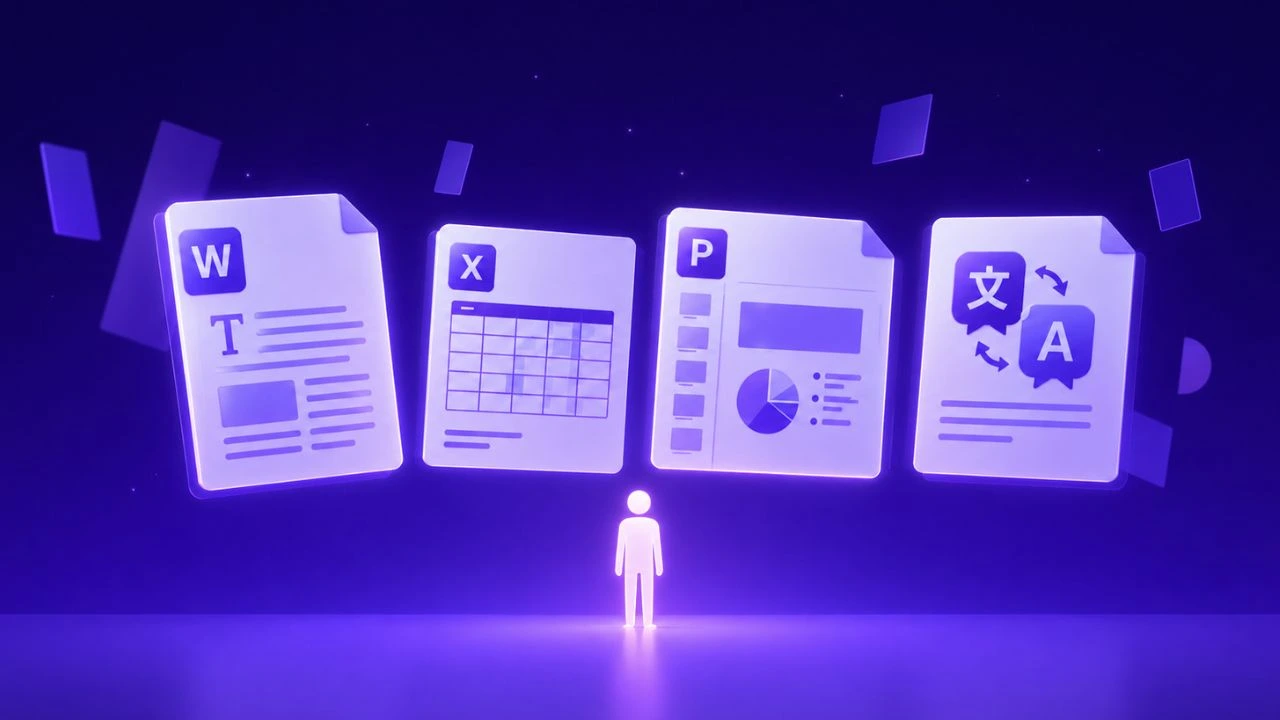
One of the most complex challenges in document localization is the expansion or contraction of text. For example, German text is notoriously longer than English, while Japanese can be more compact. Advanced platforms now utilize "elastic layout processing," which dynamically adjusts the padding of text boxes in PowerPoint or the width of columns in Excel to accommodate the new character count without overflowing or truncating information.
This capability is critical for avoiding the "cut-off text" syndrome that often haunts international marketing decks or technical manuals. For the practical workflow, AI Document Translation with Doctranslate.io keeps the source file, target output, and review step in one place.
Step-By-Step File Translation Process
The path to a production-ready document begins with an intake process that maps the document's specific data elements. By identifying the architecture of your file before processing begins, the platform prevents the common errors associated with traditional machine translation.
- Structure Identification: Upload your source file, such as a multi-sheet Excel workbook or a complex PPT deck, into the interface where the AI identifies embedded data elements and structural cells. 2. Engine Initiation: Select your target language and initiate the translation; the platform anchors all text to its original location to ensure professional layout integrity is never compromised. 3. Final Quality Review: Inspect the generated output to confirm that original tables and formatting are intact, then perform any minor final quality checks before finalizing the asset for internal or external distribution.
Use Cases by Team and Asset
Different business units rely on specialized document types that demand unique handling requirements for translation to be successful. Standardizing these processes prevents the "formatting tax" that often consumes the time of high-level operations, legal, and finance staff.
- Finance Teams: Automate the translation of P&L packs and complex audit packets while ensuring that all formula cells and cross-referenced structural data remain functional and accurate for the next audit period. * Operations Teams: Scale the delivery of global rollout documentation, including training PPTs and procedural manuals, by maintaining specific visual layouts and complex diagrams that are essential for regional onboarding.
When choosing a platform for high-stakes documentation, operations leaders should evaluate three core criteria:
- Formula Preservation: Does the system verify the integrity of spreadsheet logic, or does it treat cells as static text strings? 2. Pptx) that allows for immediate further editing, or is the output a flattened, locked file? 3. Multi-Column Awareness: For brochures or white papers, does the engine preserve the reading order across multiple columns, or does it scramble the text as it reads horizontally across the page?
Conclusion
AI document translation provides a holistic solution for global teams by ensuring that multilingual assets retain their original design and structural integrity. By minimizing the manual labor associated with formatting, layout cleanup, and cell reconstruction, your team can maintain professional standards while significantly reducing turnaround times for critical business documentation. Get started with your first file conversion at Doctranslate.io.
Start with Doctranslate.io Document Translation when the next file needs a reviewed, ready-to-share output.
Optimizing AI Document Translation: A 2026 Guide for Operations Teams with Doctranslate.io
When organizations handle complex multilingual records and specialized workflows, legacy tools often break document layouts, corrupt mathematical formulas, or fail to capture domain-specific context. Doctranslate.io provides an enterprise-ready ecosystem purpose-built to solve these operational bottlenecks directly:
- Flawless Layout & Table Preservation: Retain exact visual layout geometry, complex spreadsheets, multi-column tables, and document structures without manual post-formatting.
- Automated High-Precision Processing: Accelerate throughput across scanned PDFs, contracts, financial disclosures, and operational files using advanced neural engines.
- Enterprise Data Governance & Custom Glossaries: Enforce company-wide terminology consistency, confidential audit trails, and bank-grade data security protocols.
Transform your operational efficiency and eliminate manual document rework today by exploring Doctranslate.io .





Discussion
No comments yet