
Finance teams tasked with aggregating multi-currency line items from disparate supplier invoices into a unified quarterly P&L report face a persistent accuracy barrier during manual data entry.
Secretary Workflow: Why Teams Struggle with Documentation
Manual input processes serve as a high-risk bottleneck for teams managing intricate balance-sheet footnotes and evidence schedules. When spreadsheets rely on nested logic or sensitive formula architectures, the slightest keystroke error during raw data transfer can corrupt the entire validation chain of an audit packet. " This lack of standardization forces reviewers to spend more time hunting for missing values or correcting transcription errors than performing actual variance analysis.
Furthermore, the reliance on human eyes to spot discrepancies across hundreds of pages of control narratives almost guarantees that some anomalies will pass into the final delivery, creating audit risks that remain dormant until the end-of-year close.
Data drift occurs when manual input leads to subtle discrepancies between the source file and the final financial statement. Even a minor transposition error in a single balance-sheet cell can trigger a ripple effect, invalidating subsequent formulas and forcing a complete reconciliation of the entire folder. This rework cycle is not merely a time sink; it introduces unnecessary complexity into the control environment, making it harder for audit teams to provide clear documentation during regulatory reviews.
What Reliable Workflow Design Needs
A robust system must move beyond simple digitization to focus on structured data capture that respects the integrity of existing financial models. Organizations require extraction tools that map directly to standardized delivery formats while maintaining an immutable link between the extracted figure and the original source file.
Reliable workflows require data extraction that maps directly to your organization's standardized delivery format. Every digit moved from a raw source must retain its audit trail, allowing reviewers to verify the origin of any number in a formal report with a single click. Systems that fail to retain this metadata are fundamentally unfit for financial applications, as they remove the "source of truth" required for regulatory evidence schedules.
Automation is most effective when it replaces repetitive, rules-based tasks rather than complex human-judgment calls. Finance teams should focus on delegating the mapping of invoice fields, date formats, and currency conversions to specialized software, while reserving human expert review for complex tax treatments or unusual legal disclosures. By automating the high-volume, low-judgment tasks, you create a workflow where human error is minimized at the entry point, allowing reviewers to focus on the high-level logic and control narratives.
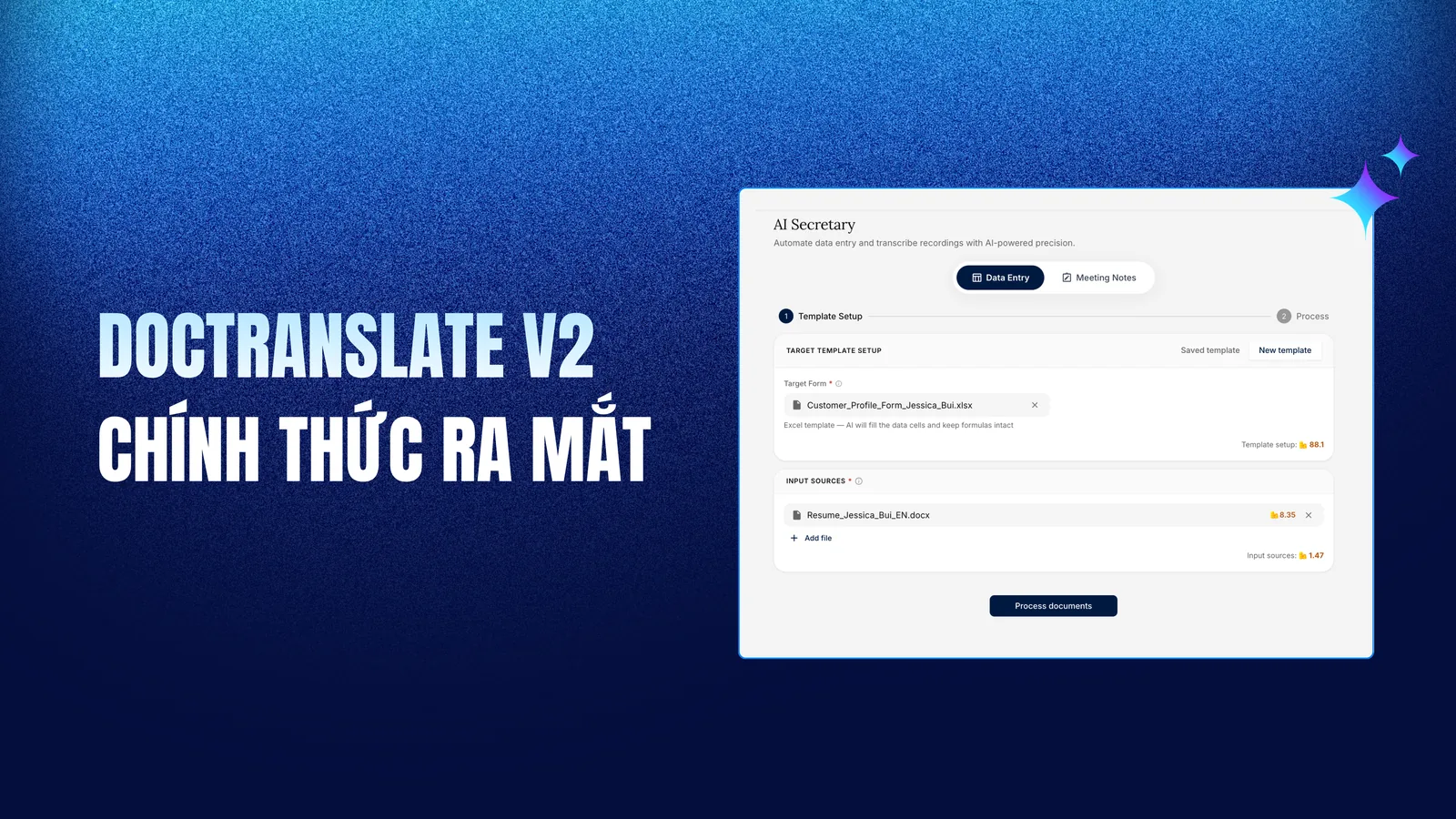
For the practical workflow, automatic data entry with Doctranslate.io keeps raw files, extracted fields, templates, and review together.
How Doctranslate.io Reduces Review Cleanup
Doctranslate.io Secretary uses AI to map raw document fields into your specific templates, saving up to 90% of manual effort by eliminating the need for copy-paste workflows. The platform is designed to handle the messy reality of global finance, where different suppliers and geographic regions produce documents in non-standardized formats that would otherwise require manual intervention.
By automating the capture of exception notes and control narratives, the platform ensures that the first version of the document is review-ready. Instead of a clerk typing out findings, the system identifies key phrases and numeric shifts in raw files, placing them into your designated exception templates with absolute precision. This removes the administrative burden of draft-to-review cycles, as the system enforces strict formatting rules from the very beginning of the process.
The system enforces strict formatting rules, minimizing the back-and-forth between the review owner and the data entry clerk. Because the AI maps figures into pre-validated templates, the output consistently aligns with your audit pack architecture, preventing the common issue of mismatched column headers or incompatible data types that usually plague manual imports. To experience this level of precision for your own internal documentation, you can integrate into your existing quarterly close process.
Step-By-Step File Processing Workflow
- Raw Documentation Ingestion: Upload your source documentation, such as scanned supplier invoices or multi-page compliance reports, into the Secretary interface. Select the corresponding target template—whether it be a balance-sheet schedule or a quarterly P&L report—to define the extraction boundaries for the AI. 2. AI-Driven Data Extraction: The system scans the raw files to extract relevant figures and text, applying logic to ensure that every value fits the target structure. This step removes the need for manual reformatting, as the engine automatically detects currency symbols, date ranges, and line items, placing them precisely into the cells of your template without altering the underlying formulas. 3. Owner Validation: The review owner performs a final validation of the extracted data against the original source context. Because the system provides a clear link back to the source file, this check is rapid and focused, allowing the team to push the document to final delivery without the typical cycle of manual correction and re-validation.
Use Cases by Team and Asset
Different financial assets require unique approaches to extraction, as the density and complexity of data vary significantly between a simple invoice and a deep-dive audit document. ** For global teams, P&L packs often involve disparate supplier invoices originating from various international markets. An automated approach extracts these multi-currency line items and maps them into a unified quarterly report, performing the necessary logic to normalize data formats before they hit your consolidated ledger.
Balance-sheet footnotes often rely on handwritten or poorly scanned documentation that traditional scanners struggle to parse. The AI interprets these non-standard inputs and converts them into validated, audit-ready schedules, ensuring that figures align with the required regulatory standards and internal control frameworks.
Legal and financial disclosures must often be mapped into standard internal audit packets to ensure regulatory adherence. By automatically capturing specific disclosures and control notes, the platform allows compliance teams to maintain a standardized format across every entity, making it significantly easier to perform cross-regional audit reviews.
The Bottom Line
Automatic data entry is not just about saving time; it is about reducing the risk of human error in critical finance and audit processes that depend on absolute numerical fidelity. Teams that implement automated extraction, such as those provided by Doctranslate.io, recover significant time to focus on strategic review and analysis instead of manual re-keying. The future of documentation lies in intelligent, context-aware workflows that bridge the gap between messy raw files and formal business deliverables, and you can start optimizing your team’s output today by exploring the capabilities of Secretary for finance teams.
Start with Doctranslate.io Secretary when the next file needs structured extraction into a reviewed template or form.


Discussion
No comments yet