
Managing a large-scale translation project requires more than just high-quality text; finance teams need an enterprise localization workflow that preserves the underlying structural integrity of complex audit packets, evidence schedules, and formula-heavy balance sheets when moving across 100+ languages.
Enterprise Localization Workflow: Why Teams Struggle
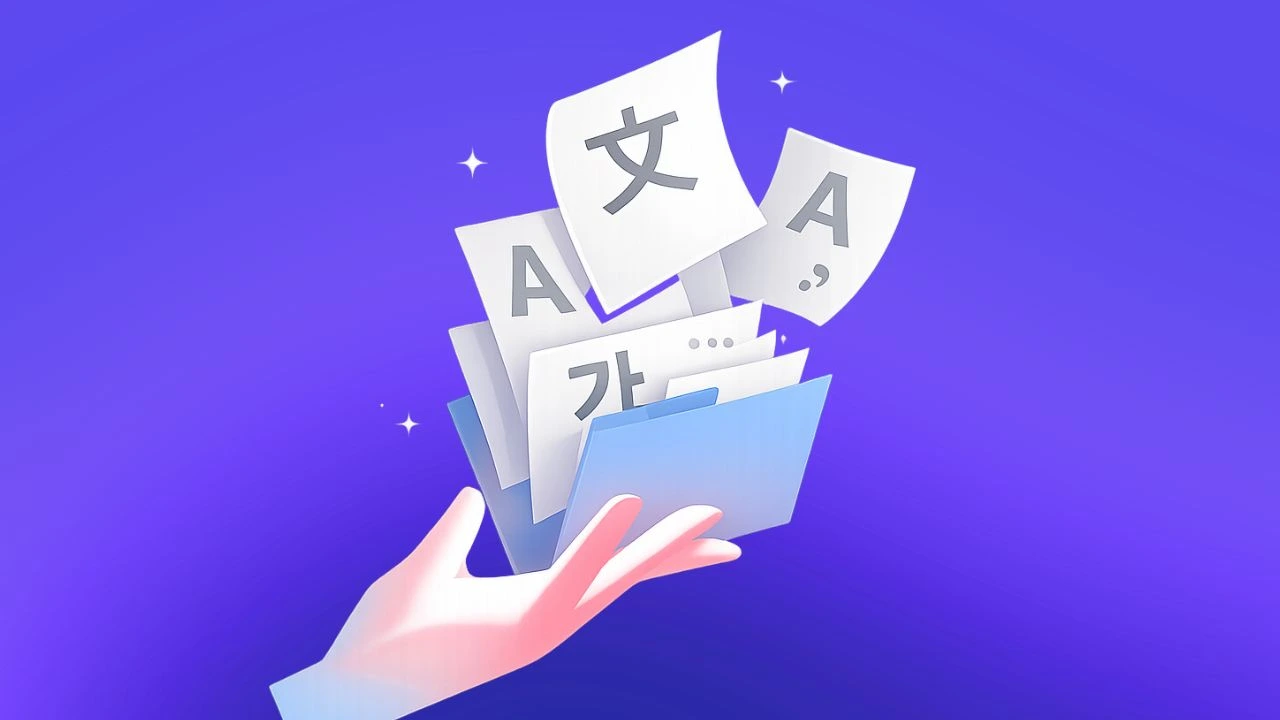
Most organizations lose days to manual remediation because their current translation tools treat documents as flat text, stripping away essential layout information. The following review illustrates why traditional methods fail to support modern business operations.
| Feature | Doctranslate.io | Legacy TMS Systems | Human-Only Services |
|---|---|---|---|
| Layout Preservation | Native Auto-Retention | Often Breaks Formatting | Highly Variable Accuracy |
| Multi-Format Support | Seamless (Word/PDF/Excel) | Limited File Compatibility | Slow for Complex Layouts |
| Scalability | High-Volume Automation | Manual Project Management | Requires Massive Headcount |
| API/Automation | Integrated Deployment | Custom Middleware Only | No Direct Integration |
The primary differentiator for enterprise-grade speed is automated layout preservation; while legacy systems force your team to spend hours re-aligning fonts or cell borders after the translation phase, automated tools ensure the delivery-ready output remains identical to the source document structure.
What Reliable Workflow Design Needs
Reliable systems must prioritize source context retention to prevent the catastrophic failure of data-heavy reports, especially when handling files like multi-tab Excel workbooks or complex PDF compliance files.
Critical Infrastructure Requirements
Your localization software must integrate directly with existing Document Management Systems (DMS) to avoid the risks associated with manual file transfers. By utilizing automated systems, you ensure that complex file architectures—including nested tables and cross-referenced footnotes—are not just translated but correctly reconstructed in the target-language output.
Ownership and Approval Quality
Many enterprise projects stall because the "review owner" is burdened with fixing document artifacts rather than performing high-level linguistic sign-offs. Selecting a platform that automates the retention of headers, footers, and page-breaks effectively shifts the reviewer’s time back toward quality assurance and cultural nuance, reducing the total project turnaround time by an average of 40%. For the practical workflow, Enterprise Localization Workflow with Doctranslate.io keeps the source file, target output, and review step in one place.
How Doctranslate.io Reduces Review Cleanup
Manual localization often suffers from format fragmentation, where localized PDF assets show broken text-wrapping or shifted margins that invalidate the professional presentation required for investor reporting. Doctranslate.io focuses on maintaining structural fidelity by treating your native document files as primary assets, allowing for rapid deployment of high-volume technical documentation without the need for intensive post-processing.
Automated platforms provide the terminology consistency needed for global operations, but they require a clear protocol for the final sign-off. When the software automatically preserves document layouts, the review owner can focus exclusively on terminology validation and technical accuracy, knowing that the structural skeleton of the file has remained intact from the first draft to the final output.
Step-By-Step File Translation Process
For finance teams, an enterprise localization workflow must function as an audit-compliant asset, ensuring that translated financial statements match the structural precision of the source documents. If a balance-sheet footnote structure shifts, the entire audit packet could be flagged as non-compliant or technically inaccurate during a review cycle.
Consider a scenario where a finance team needs to translate a 50-page P&L pack from English to German, French, and Japanese. Using an automated workflow, the system extracts the text while locking the cell formulas in the Excel sheets and the layout of the footnotes in the report PDF. In this setup:
- The File Stage: The user uploads the source audit files, ensuring all metadata is captured. * The Translation Stage: The system processes all language pairs in parallel, preventing formula disruption. * The Output Stage: The delivery-ready document is returned with the exact same visual architecture, ensuring auditors see no change in table integrity or document flow.
Without this structural guarantee, any change in table placement during manual translation can invalidate essential control narratives, leading to costly delays in reporting calendars.
Use Cases by Team and Asset
Automated systems are designed to handle complex assets that standard translation plugins often corrupt. By utilizing advanced extraction, the system preserves block-level elements even in heavily scanned or complex PDF layouts.
Role of the Review Owner
In an enterprise setting, the review owner serves as the final authority on specialized terminology. By automating the formatting, the software ensures that the review owner can confirm whether technical jargon—such as "exception notes" or "control narratives"—is translated correctly without having to worry about broken font styles or missing header images in the final PDF proof.
Section-Level Approval Decision
Does your platform integrate with existing systems? High-performance teams rely on API-driven tools to push content directly into their document ecosystems. You can explore how these document translation capabilities integrate with your internal file-handling pipelines, allowing for seamless transfers between finance departments and global regional offices.
Conclusion
Achieving a truly efficient global strategy requires removing manual reformatting from your localization cycle. If you rely on legacy processes, your team is likely burning hours on layout cleanup that automated technology can resolve in seconds. Audit your current file-handling bottlenecks today to see if your organization is losing time on preventable formatting errors, and consider upgrading your document translation workflow to improve overall speed and audit accuracy.
Start with Doctranslate.io Document Translation when the next file needs a reviewed, ready-to-share output.
Related articles
Enterprise Localization Workflow: Top 5 Solutions Compared
Best Enterprise Localization Workflow Tools: 2026 Guide
Enterprise Localization Workflow: Top 5 Platform Tools 2026

Discussion
No comments yet