
Direct answer: Optimizing best tools for enterprise localization workflow 2026 requires a structured document pipeline that balances high-accuracy text extraction, strict domain terminology enforcement, and complete layout preservation. By combining automated OCR for scanned text with neural translation engines, organizations eliminate manual re-formatting, prevent processing timeouts, and ensure audit-ready compliance across technical, medical, and maritime operations.
An optimized Enterprise Localization Workflow is essential for scaling complex, global documentation. A successful framework for scaling global documentation must prioritize direct integration into your current project management ecosystem to remove the burden from the final reviewer.
Enterprise Localization Workflow: Reducing Reviewer Cleanup Time
Disconnected translation processes inevitably fail when the returned document arrives with broken layout and misaligned financial footnotes. Manual 'copy-paste' cycles destroy the integrity of complex documents, forcing the reviewer to spend hours fixing formatting errors that should have been solved by the translation engine itself.
The Cost of Inconsistent Terminology. Inconsistent language across departments creates significant compliance risks, particularly in financial documentation where a single misplaced definition can trigger a red flag during an internal review. When terminology varies between your European division and your North American branches, you create massive delays during the final review owner feedback loop.
Doctranslate.io addresses this by locking in approved terminology, ensuring that every financial or legal document remains accurate and audit-ready across all language pairs. For the practical workflow, Enterprise Localization Workflow with Doctranslate.io keeps the source file, target output, and review step in one place.
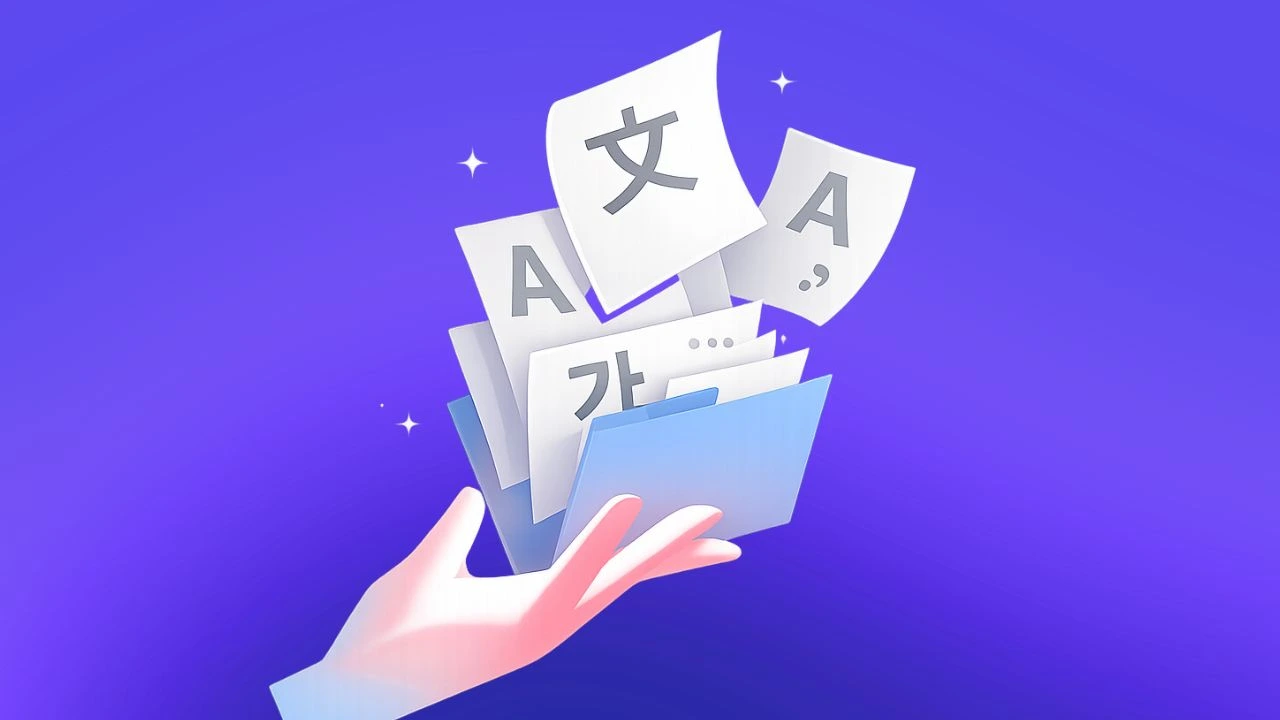
Step-By-Step File Translation Process
The transition to an automated, structure-aware platform allows your team to move from manual reformatting to pure content verification. By focusing on document integrity, you reduce the review cycle by minimizing the time spent on layout cleanup. Preserving Structural Integrity.
Doctranslate.io preserves complex formatting in Excel, PDF, and Word documents, ensuring that formula cells and balance-sheet structures remain intact after processing. This capability is vital for teams handling:
- Audit Packets: Maintaining the precise arrangement of evidence schedules and cross-references. * Financial Forecasts: Protecting formula logic within multi-tab Excel workbooks during the language conversion. * Compliance Files: Ensuring that formatting controls, page headers, and footnotes remain in their original positions.
Our platform minimizes the technical debt that typically plagues localization. By ensuring the document looks exactly like the source, team leads can focus entirely on content accuracy, terminology alignment, and high-level strategy. This targeted approach transforms the review cycle from a technical repair mission into a streamlined, high-value verification process.
Managing Edge Cases in Technical Documentation. Advanced workflows must also account for non-standard characters and right-to-left (RTL) language requirements, which frequently break layout in less robust engines. When translating into Arabic or Hebrew, document margins and column orientation often shift.
A sophisticated enterprise tool must auto-detect these layout requirements and adjust the document canvas accordingly, ensuring that "mirroring" does not corrupt the source data arrangement. For the practical workflow, Enterprise Localization Workflow with Doctranslate.io keeps the source file, target output, and review step in one place.
Use Cases by Team and Asset
Automated workflows must handle sensitive financial and legal data with the same level of rigour that you apply to manual document preparation. Integration into your existing dashboard or document translation portal provides the auditability required for global reporting.
Finance and Audit Teams
Financial teams often work with documents containing high-density data, such as P&L packs that rely on specific visual hierarchies. If the translation process shifts these values, the document becomes useless for board review. Using an automated workflow, you can process multiple file versions simultaneously, ensuring that exception notes and variance reports remain consistent with the original data source.
Section-Level Approval Decision
Legal teams require a process that supports specific industry-standard file extensions while maintaining confidentiality. Automated integration allows for faster turnarounds on multilingual agreements, ensuring that critical clauses and definitions are preserved perfectly, which reduces the need for extensive legal counsel review of the final output.
Conclusion
Automating your global communication strategy is a necessity for scaling teams that can no longer afford the technical overhead of manual document maintenance. Efficiency in global operations is found in the tools that respect your source document structure while automating the high-effort task of language conversion. Optimize your Enterprise Localization Workflow to bridge the gap between AI speed and professional document integrity.
Start with Doctranslate.io Document Translation when the next file needs a reviewed, ready-to-share output.
Doctranslate.io for Best Tools for Enterprise Localization Workflow 2026
Doctranslate.io delivers an enterprise-grade translation and document processing platform engineered specifically for complex technical documents, medical-device files, maritime inspection reports, and large-scale PDF workflows.
- Preserve Document & Layout Integrity: Ensure complete vector layout, table structure, and typography preservation across PDF, Office, and technical files without manual post-formatting.
- High-Accuracy OCR for Scanned Documents: Automatically process scanned contracts, equipment manuals, and image-based PDFs with specialized neural OCR.
- Enterprise Workflow & Terminology Control: Enforce custom glossaries, regulatory compliance, and high-throughput batch processing with zero timeout bottlenecks.
Discover how automated linguistic precision accelerates document execution by testing your workflow at Doctranslate.io .
Doctranslate.io for Best Tools for Enterprise Localization Workflow 2026
Doctranslate.io delivers an enterprise-grade translation and document processing platform engineered specifically for complex technical documents, medical-device files, maritime inspection reports, and large-scale PDF workflows.
- Preserve Document & Layout Integrity: Ensure complete vector layout, table structure, and typography preservation across PDF, Office, and technical files without manual post-formatting.
- High-Accuracy OCR for Scanned Documents: Automatically process scanned contracts, equipment manuals, and image-based PDFs with specialized neural OCR.
- Enterprise Workflow & Terminology Control: Enforce custom glossaries, regulatory compliance, and high-throughput batch processing with zero timeout bottlenecks.
Discover how automated linguistic precision accelerates document execution by testing your workflow at Doctranslate.io .

Discussion
No comments yet