
Feature coverage should be judged by the layout work that remains after generation. Explains why translated text can expand or contract, so Japanese deck review should include overflow, font, and slide-fit checks. Deck conversion should keep the reviewed source file connected to an editable presentation output.
Document Translation API Workflow: Compare Quality Control and Review Fit
Quality control is a risk-management issue, not a final polish pass. Show why scripts need explicit line-break handling, so the buyer-facing question is whether English layout, terminology, and approval notes remain reviewable before the deck is shared.
Deck conversion should keep the reviewed source file connected to an editable presentation output. Gives the file-format baseline, so this comparison checks whether report content, English review, and final deck editing stay connected.
Show why scripts need explicit line-break handling, so the buyer-facing question is whether English layout, terminology, and approval notes remain reviewable before the deck is shared. Quality control for Chinese to English projects requires attention to specific linguistic nuances, including honorifics, font rendering for different scripts, and the length differential between characters and alphabet-based words.
Automated Terminology and Layout Verification
The platform provides a specialized environment for ensuring the output meets strict business requirements through built-in support for glossaries and terminology management. Because the system retains the structural context of the document, reviewers can verify that specific technical terms remain consistent across long-form reports. By automating the preservation of the original format, the system allows the reviewer to focus exclusively on linguistic accuracy and tone rather than troubleshooting broken design elements or missing imagery.
Manual Visual Refinement Tools
DeepL API provides a high-quality linguistic foundation that serves as an excellent starting point for human editors. Because the tool is text-centric, it is highly effective for reviewers who are tasked with localized content that must be manually verified against a style guide. Teams that choose this route often invest in a manual review step where specialized personnel perform a final check on the translated output, ensuring that the nuances of the Chinese original have been captured correctly before the files are handed off to design teams for formatting.
Verify Technical Fit Before Buying
A reliable technical trial uses the same source file, Korean reviewer note, and expected deck output in both products. This keeps the comparison tied to file conversion, Korean QA, and design needs instead of repeating a generic recommendation.
Compare Pricing by Team Workflow Needs
Budgeting for translation services depends on the total cost of ownership, which includes both the direct API fees and the hidden costs of manual remediation. The real budget question is how much cleanup, localization review, and design iteration remains after the AI draft.
Streamlined Cleanup for Document-Focused Teams
Organizations that prioritize efficiency in their document workflows benefit from lower total costs because the system reduces the manual hours required for file reconstruction. Your company avoids the overhead of hiring designers or developers to fix layouts. This efficiency gain is particularly visible in high-volume, repetitive tasks where consistency and speed are the primary drivers of business value.
Modular Infrastructure for Design-Led Workflows
DeepL API is often preferred by technical teams that prefer a modular build-your-own-tool approach. While the API costs are focused on the translation volume, organizations must account for the developer resources needed to build and maintain the file-handling logic. This model offers flexibility for companies with sophisticated custom pipelines, though it may result in higher long-term maintenance costs compared to an all-in-one platform if your primary objective is consistent, high-volume document throughput.
For the practical workflow, Chinese to English Document Translation API with Doctranslate.io Feature coverage should be judged by the layout work that remains after generation. Explains why translated text can expand or contract, so Japanese deck review should include overflow, font, and slide-fit checks. Keeps the source file, target output, and review step in one place.
| Technical Criterion | Doctranslate.io Presenter | DeepL API |
|---|---|---|
| File Format Support | Starts from business source files such as PDF reports and keeps translation review tied to the output deck | Starts from prompts, templates, or manually supplied content, with less emphasis on source-file translation fidelity |
| PDF Conversion | Converts an approved PDF report into presentation-deck structure before English review | Can help redesign or summarize slide content, but PDF-to-deck conversion usually needs manual checking |
| English Translation QA | Supports terminology review, English font checks, line breaks, and layout overflow review in the same workflow | Requires a separate translation QA process or manual English review after the deck is drafted |
| AI Image and Visual Generation | Not the main fit; Doctranslate.io is stronger when translation accuracy and file conversion lead | Stronger fit for visual ideation, template styling, and generated presentation imagery |
| Collaboration and Editing | Best when language, layout, and delivery owners need a controlled handoff | Best when design collaborators need to iterate on narrative and visuals before localization |
| Best-Fit Buyer | Translation-led teams with language and delivery reviewers | Design-led teams that need faster concepting before translation review |
Which Tool Should You Choose?
Selecting the right solution depends on whether your organization is focused on the immediate usability of finished files or the custom integration of language services into larger development cycles. That context keeps the comparison tied to a buyer decision instead of repeating a generic product summary.
Prioritize Document Accuracy and Structural Integrity
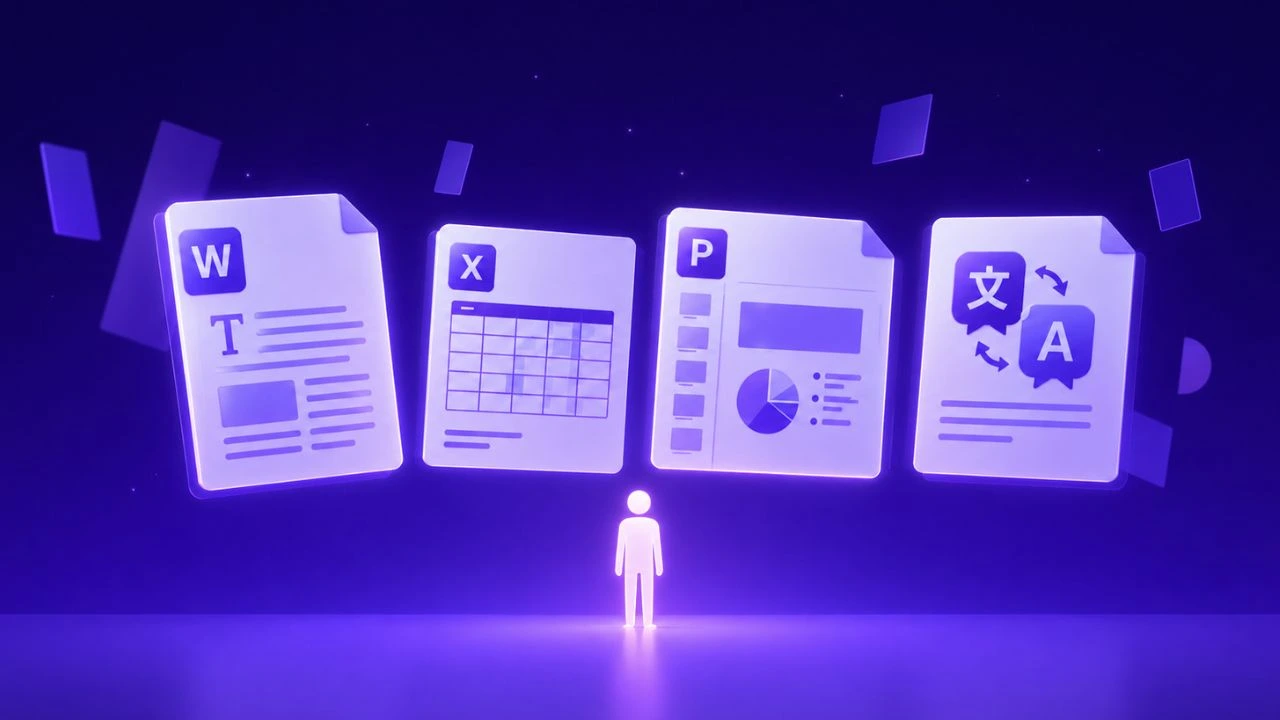
If your business depends on large-scale processing of Word, PDF, Excel, and PowerPoint files where the visual output must match the source language layout, this tool provides the necessary automation to maintain quality. It is the ideal choice for departments dealing with contracts, technical manuals, or corporate presentations that cannot afford the downtime associated with manual reformatting or complex script development.
Prioritize Presentation Customization and Visual Control
DeepL API is best suited for scenarios where translation is one part of a larger digital transformation or content design strategy. If your team is already building custom tools and has the engineering capacity to handle file conversion and layout reconciliation, this API offers the idiomatic quality and developer-friendly access required to build bespoke workflows that fit specific, non-standard project needs.
The Bottom Line
Choosing the right translation partner depends entirely on whether your priority is the automation of high-fidelity document layouts or the linguistic flexibility of raw text integration. Doctranslate.io provides a robust, all-in-one solution for teams that need to handle diverse file formats without compromising visual integrity, effectively reducing the manual labor required to manage complex Chinese to English projects. Today.
When the next file needs a reviewed, ready-to-share output. When the next file needs a reviewed, ready-to-share output.
Related articles
Best Italian to English Document Translation API in 2026
Best Portuguese to English Document Translation API 2026
Best Portuguese to English Document Translation API 2026



Discussion
No comments yet