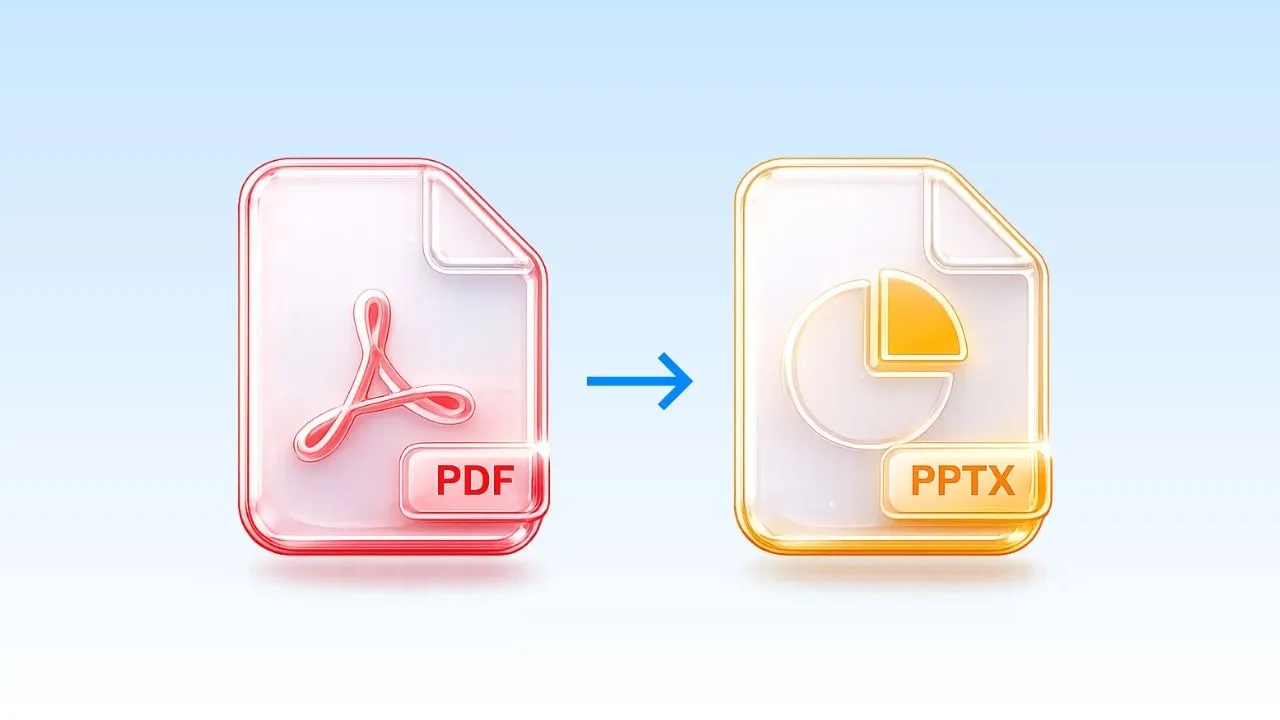
Compare Source-To-Deck Workflow for German Teams
Deck conversion should keep the reviewed source file connected to an editable presentation output. Microsoft PowerPoint file-format support gives the file-format baseline, so this comparison checks whether report content, German review, and final deck editing stay connected. You need a workflow that minimizes the friction between your source data and the final localized product. When your core task involves taking a research document or a formal report and moving it into a German-speaking environment, the ability to maintain the structural logic of the source material is paramount.
Doctranslate.io: Automates Document-To-Deck Translation
Doctranslate.io focuses on the transition from static business documentation to a functional slide deck. By ingesting source files directly, it identifies key insights and converts them into structured slides while handling the nuance of English-to-German presentation translation. This approach saves hours of manual copy-pasting, as the tool is engineered to recognize corporate document hierarchies and map them accurately to English to German presentation translation layouts.
Gamma: Designs Presentations from Prompts and Templates
Gamma operates by taking a high-level concept or text prompt and using generative AI to build a presentation from the ground up. It is designed for users who want to craft a visual narrative rather than migrate a specific document. While it can import text, the process focuses on selecting templates and applying design styles that the system interprets as appropriate for your specified topic.
Compare Feature Coverage for Business Teams
Feature coverage should be judged by the layout work that remains after generation. W3C text-size guidance for translation explains why translated text can expand or contract, so Japanese deck review should include overflow, font, and slide-fit checks. Your team requires a solution that fits seamlessly into existing documentation cycles without requiring manual oversight of every visual element. Organizations that rely on accuracy—especially when dealing with financial, legal, or technical data—need to ensure that the transition between languages does not compromise the meaning or the structural integrity of their original report.
Doctranslate.io: Preserves Translation and Layout in One Flow
Doctranslate.io excels in environments where the document structure must remain consistent across languages. Because it is built for high-stakes business communication, it ensures that your German deck translation mirrors the English source in both flow and technical accuracy. Maintaining linguistic and cultural context is a primary driver for global business success.
Gamma: Supports Design, Collaboration, and Editing
Gamma provides a broad suite of design-centric features that prioritize the "look and feel" of the presentation. It is ideal for teams that need to collaborate on visual styling, offering a drag-and-drop editor that allows for extensive manual customization. If your priority is building a modern, sleek presentation from scratch, these tools provide a flexible workspace to manipulate themes, fonts, and imagery.
Compare Quality Control and Review Fit
Quality control is a risk-management issue, not a final polish pass. Unicode line breaking rules show why scripts need explicit line-break handling, so the buyer-facing question is whether German layout, terminology, and approval notes remain reviewable before the deck is shared. Reviewing localized content in a different language presents significant risks if the tools used do not account for industry-specific terminology. You need a platform that helps your team maintain quality standards without requiring deep expertise in every target language.
Doctranslate.io: Checks Terminology, Format, and Language Quality
Doctranslate.io is designed to handle the complexities of business German, which often requires a formal tone and precise technical vocabulary. By focusing on language quality during the conversion, it reduces the need for extensive post-translation review. If your team has previously struggled with inconsistent terminology in localized decks, Doctranslate.io’s ability to anchor the translation to the source document's context provides a necessary safeguard against linguistic errors.
Gamma: Polishes Visuals Through Manual Review
Gamma’s review process is geared toward aesthetics and visual impact rather than linguistic precision. While it provides a user-friendly interface for manual adjustments, the onus is on the user to ensure the translated text fits appropriately within the generated design. For teams focusing on branding, this manual flexibility is a benefit, allowing them to tweak the visual hierarchy until the presentation matches corporate guidelines perfectly.
Compare Pricing by Team Workflow Needs
Choosing between these tools involves balancing the cost of manual labor against the cost of software subscriptions. The best fit is found by identifying which part of your current workflow is currently consuming the most billable hours.
Doctranslate.io: Reduces Cleanup for Translation-Led Teams
Doctranslate.io pricing should be evaluated as subscription cost plus the hours spent on manual PDF conversion, layout cleanup, and German reviewer handoff. It has more predictable operating value when one delivery path reduces both slide rebuilding and language QA. Buyers should compare plan limits with the number of reports they localize each month.
Gamma: Supports Design-Led Presentation Teams
Gamma functions as an all-in-one design partner, replacing the need for separate graphic design software in many cases. It is a logical choice for teams that lack dedicated design resources and need to produce visually impressive pitches on a tight timeline. Its pricing model reflects its value as a generative design suite, catering to users who prioritize creativity and speed of iteration.
| Technical Criterion | Doctranslate.io Presenter | Gamma |
|---|---|---|
| File Format Support | Starts from business source files such as PDF reports and keeps translation review tied to the output deck | Starts from prompts, templates, or manually supplied content, with less emphasis on source-file translation fidelity |
| PDF Conversion | Converts an approved PDF report into presentation-deck structure before German review | Can help redesign or summarize slide content, but PDF-to-deck conversion usually needs manual checking |
| German Translation QA | Supports terminology review, German font checks, line breaks, and layout overflow review in the same workflow | Requires a separate translation QA process or manual German review after the deck is drafted |
| AI Image and Visual Generation | Not the main fit; Doctranslate.io is stronger when translation accuracy and file conversion lead | Stronger fit for visual ideation, template styling, and generated presentation imagery |
| Collaboration and Editing | Best when language, layout, and delivery owners need a controlled handoff | Best when design collaborators need to iterate on narrative and visuals before localization |
| Best-Fit Buyer | Translation-led teams with language and delivery reviewers | Design-led teams that need faster concepting before translation review |
Which Tool Should You Choose?
Selecting the right software requires an honest assessment of your daily output. You are essentially choosing between a specialized translation utility and a general-purpose design engine. That context keeps the comparison tied to a buyer decision instead of repeating a generic product summary.
Choose Doctranslate.io When Translation Accuracy Leads
Choose Doctranslate.io if your business depends on transforming data-heavy reports into accurate, localized presentations. It is the right fit when you have a source document that must be respected, and you cannot afford to have your message lost or misinterpreted during the language conversion process. You can explore how this workflow streamlines your specific needs at the Doctranslate.io Presenter page .
Choose Gamma When Presentation Design Leads
Choose Gamma if your primary goal is visual storytelling. It is perfect for marketing teams, startups, or individuals who need to build beautiful, modern presentations from a prompt. That context keeps the comparison tied to a buyer decision instead of repeating a generic product summary.
Procurement should score the tools on remaining human work, not on the first draft alone. Track how many slides need layout repair, how many terms require German reviewer changes, and whether the final owner can approve the deck without moving content between tools. That gives translation-led teams a fair way to compare Doctranslate.io with Gamma without turning the recommendation into a brand claim.
A practical evaluation should include one representative report, one expected German deck, and one reviewer who owns final approval. That keeps the test grounded in real delivery work while avoiding a generic feature checklist. The result should show which tool leaves fewer unresolved language, layout, and handoff tasks for the team.
The Bottom Line
For most teams, presentation translation workflow works best when teams define the source file, layout requirements, terminology, numbers, and approval rules before delivery. Doctranslate.io Presenter should support that plan without adding unnecessary cleanup or review loops. Start with Doctranslate.io Presenter when the next file needs a reviewed, ready-to-share output.

Discussion
No comments yet