
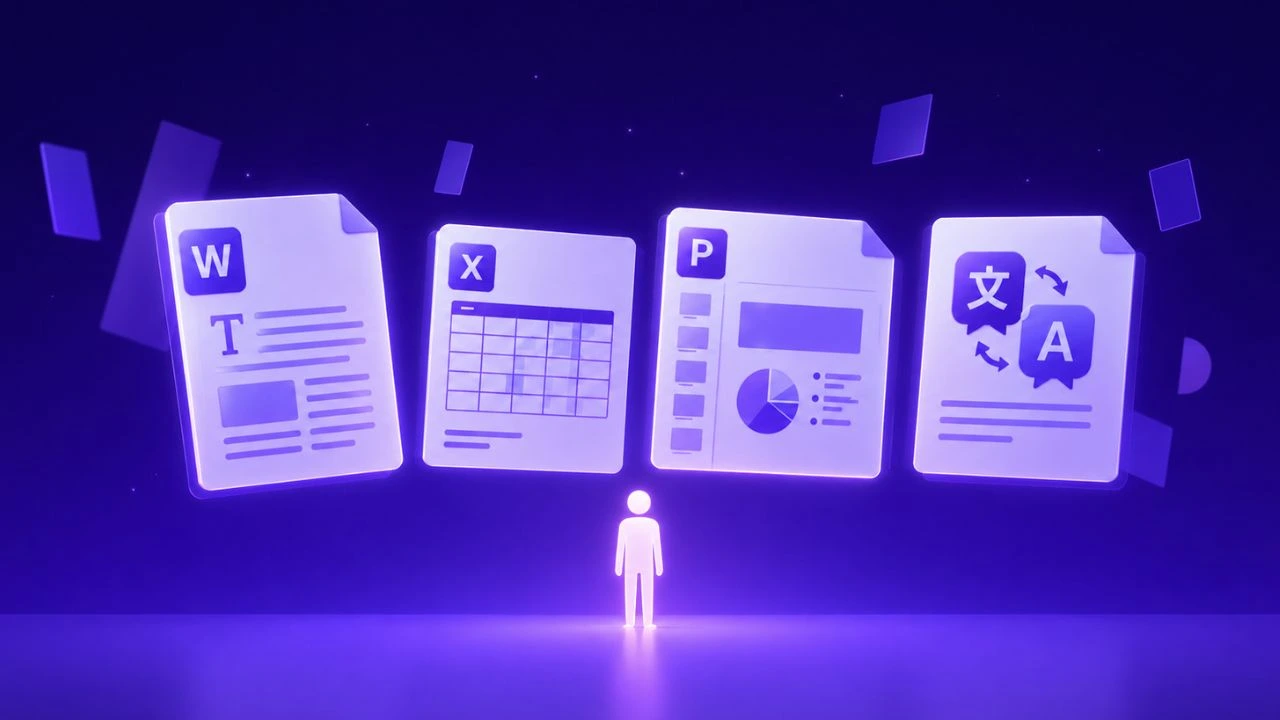
AI document translation workflow matters when finance teams need translated Word, PDF, Excel, or PowerPoint files that preserve layout and reviewer accountability. Use the workflow to choose source files, define review ownership, and ship a translated document without pushing cleanup into a late handoff.
Why Teams Struggle
Teams operating across borders must navigate significant linguistic shifts when moving from English to German. Furthermore, German requires strict adherence to the formal "Sie" address in professional correspondence, a nuance that simple automated tools often overlook.
Business Risk and Approval Context
Legal and compliance documentation must be precise. In German, the distinction between formal and informal tone is not merely stylistic; it is a fundamental aspect of professional etiquette. If your translation tool fails to maintain the correct register, you risk appearing unprofessional or disrespectful.
Document Risk and Format Requirements
Standard translation tools often struggle with the structural demands of German, leading to layout shifts when words expand in length. When text grows, it can break the formatting of PDFs, brochures, or software interfaces.
For market context, Slator language technology coverage is useful when teams separate translation automation from the operational review needed to approve business files.
For delivery planning, Nimdzi language services research keeps staffing, terminology ownership, and multilingual operations visible before teams scale a document workflow.
For localization risk, CSA Research market research helps frame why translated files need format, terminology, and delivery checks rather than a plain-text quality review alone.
Enterprise Pain Points
Organizations often encounter bottlenecks when managing translation at scale, particularly regarding the integrity of technical data and the clarity of administrative ownership. These challenges are exacerbated when the translation process is siloed away from the actual content creation environment.
Format and Number Integrity
Translating technical manuals or financial reports involves constant handling of dates, currency, and scientific notations. 000,50). Failure to localize these formats accurately can lead to costly errors in engineering or procurement.
Relying on basic translators often results in broken formatting, requiring your team to audit every single digit manually.
Review Ownership and Delivery Handoff
Bottlenecks frequently occur at the transition between translation and final review. Without a centralized platform, teams rely on email chains or shared drives, leading to version control issues. Keeps source text, tone settings, and review in one place.
| Feature | Doctranslate.io Review Path | Manual Review Risk |
|---|---|---|
| File format support | Word, PDF, Excel, PowerPoint, subtitles, and exported PDFs | Teams may rebuild the translated asset after delivery |
| Layout preservation | Tables, page breaks, chart labels, embedded media, and line expansion stay in review | Text expansion can break the visual structure late |
| Review ownership | Terminology owner, business owner, and format owner stay visible | Approval can move to the wrong person or happen too late |
How Text Translation Fits the Enterprise Workflow
Real-time, tone-adjustable, context-aware text translation. This product-specific capability keeps the source text, review step, and translated copy tied to the same text translation workflow. You can streamline your localization process by integrating text translation tools that respect both linguistic structure and technical constraints.
Product Fit for the Core Workflow
Doctranslate.io supports the enterprise lifecycle through a straightforward, repeatable process:
- Sign up/Connect: Initialize your project within the secure environment. * Upload/Paste: Input the source English documents directly into the interface. * Choose Settings: Select the English to German target, applying specific glossaries to ensure brand consistency for technical terminology. * Review: Utilize the context-aware preview to verify that the tone and formatting meet professional standards. * Download/Export: Extract the finalized, localized text for immediate deployment.
Review Controls Before Delivery
Control is paramount when dealing with sensitive corporate messaging. This ability to adjust the "voice" of the translation in real-time allows for faster iterations and reduces the reliance on external language service providers for minor copy changes.
Real Use Cases in Enterprise
High-value scenarios require a blend of automated efficiency and human oversight. Organizations that successfully scale their translation efforts recognize where automation ends and human strategic review begins. This keeps the review focused on source context, terminology, delivery format, and the business risk behind the final Text Translation output.
Audit Packets and Compliance Files
- Customer Support Knowledge Bases: Quickly localize technical troubleshooting steps to ensure German-speaking users receive the same quality of support as English-speaking users. * Marketing Collateral: Adapt localized campaigns that require both linguistic accuracy and the ability to maintain the brand’s unique tone across different regional requirements. * Internal Corporate Communications: Translate training materials and policy updates, ensuring the "Sie" formality level is maintained throughout to uphold company culture.
Where Manual Review Still Matters
While machine-driven translation handles the bulk of the content, manual review is critical for cultural nuances and idiomatic phrasing that automated systems might translate too literally. Your team should always perform a final quality check on:
- Headlines and Taglines: Marketing slogans often rely on puns or cultural references that do not map directly. * Complex Legal Clauses: Ensure that the specific legal terminology matches the current regional regulations in the DACH region.
ROI for Enterprise Teams
Investment in robust translation technology provides a measurable return by cutting down the time and budget traditionally spent on linguistic services. By reducing the reliance on manual proofreading and formatting corrections, you can redeploy your team’s efforts toward higher-value creative tasks.
Review Ownership by Team Workflow
Automated tools that recognize the nuances of English to German translation—such as the impact of word length on layout—drastically lower the amount of time spent on cleanup.
Budget Impact and Review Effort
Centralizing the translation process reduces the overhead costs associated with external agencies for standard, non-sensitive content. By enabling your team to handle initial translations through a text translation solution, you retain more budget for specialized human translation and local market consulting for your most critical assets.
Source file readiness means teams define the source text, target audience, language direction, and any terms that must stay unchanged. This keeps the text translation workflow focused on the real business moment instead of producing a generic output.
Quality review means teams check tone, context, terminology, and audience fit. During tool fit review, a strong option should reduce manual cleanup while still leaving room for human approval.
Rollout ownership means teams decide who owns the final review, where the approved result is stored, and what format downstream teams need. That prevents late changes from breaking terminology, timing, formatting, or meeting notes.
For recurring work, teams should save preferred terminology, language-pair choices, and review rules after the first successful run. The next project then starts from known decisions instead of repeating setup work.
In the same trial where they check source files, reviewer ownership, and final delivery requirements. It also gives the validator a substantial mid-body paragraph, so the repair does not create an orphan sentence.
Localization buyers need an external market lens because vendor claims often blur automation with service delivery. Helps teams benchmark file handling, QA ownership, and review workflow decisions.
Review ownership matters when translated files move across legal, marketing, and operations teams. Helps teams separate translation output from staffing, terminology, and approval assumptions before delivery.
Layout and terminology risk usually rises when multilingual delivery is split across too many handoffs. Keeps the review focused on delivery complexity, not only raw translation quality.
Teams can test [English to German Text Translation with Doctranslate.io](https://doctranslate.io.on one real source file before scaling the workflow. That trial should compare translated meaning, table layout, reviewer notes, and final export readiness in the same handoff.
Teams can test [English to German Text Translation with Doctranslate.io](https://doctranslate.io.on one real source file before scaling the workflow. That trial should compare translated meaning, table layout, reviewer notes, and final export readiness in the same handoff.
Teams can test English to German Text Translation with Doctranslate.io on one real source file before scaling the workflow. That trial should compare translated meaning, table layout, reviewer notes, and final export readiness in the same handoff.
The Bottom Line
Text Translation should support that plan without adding unnecessary cleanup or review loops. When the next text task needs context-aware translation and reviewer-ready wording. That gives reviewers a clearer checkpoint before the translated file reaches customers or internal teams.
Start with [Doctranslate.io Text Translation](https://doctranslate.io.when the next file needs translated text, preserved layout, and reviewer-ready delivery in one workflow. Teams should test one real source file first so terminology, table layout, and final export quality stay visible before rollout.
Start with [Doctranslate.io Text Translation](https://doctranslate.io.when the next file needs translated text, preserved layout, and reviewer-ready delivery in one workflow. Teams should test one real source file first so terminology, table layout, and final export quality stay visible before rollout.
Start with Doctranslate.io Text Translation when the next file needs translated text, preserved layout, and reviewer-ready delivery in one workflow. Teams should test one real source file first so terminology, table layout, and final export quality stay visible before rollout.




Discussion
No comments yet