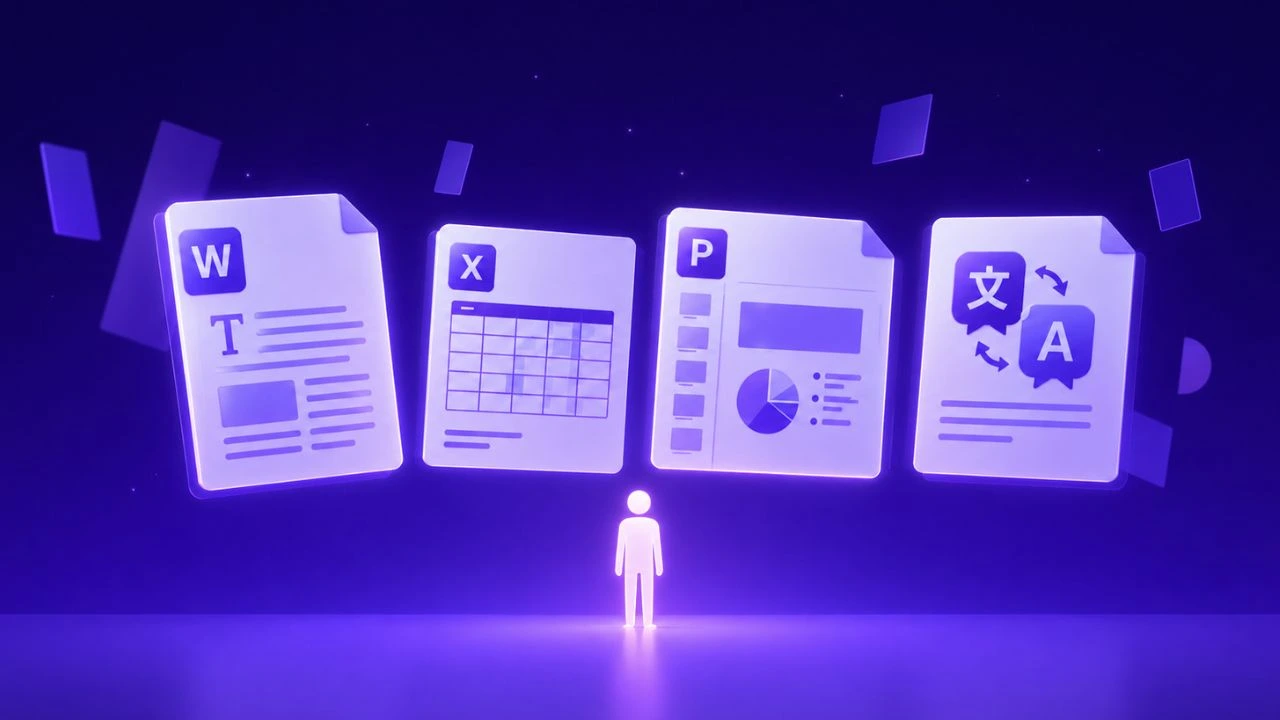
AI document translation workflow matters when finance teams need translated Word, PDF, Excel, or PowerPoint files that preserve layout and reviewer accountability. Use the workflow to choose source files, define review ownership, and ship a translated document without pushing cleanup into a late handoff.
Why Teams Struggle
You operate in a landscape where speed to market is the primary driver of competitive advantage. When your messaging lacks a localized touch, you risk alienating the Italian consumer who values both linguistic precision and professional tone.
Business Risk and Approval Context
Incorrect messaging in the Italian market creates significant reputational risk. Beyond tone, inaccurate terminology in regulated industries—such as finance or legal services—can lead to compliance issues.
Document Risk and Format Requirements
Marketing assets are rarely simple plain-text documents. When translators or legacy software struggle with these intricacies, your internal teams end up spending more hours fixing broken layouts than creating new content.
For market context, Slator language technology coverage is useful when teams separate translation automation from the operational review needed to approve business files.
For delivery planning, Nimdzi language services research keeps staffing, terminology ownership, and multilingual operations visible before teams scale a document workflow.
For localization risk, CSA Research market research helps frame why translated files need format, terminology, and delivery checks rather than a plain-text quality review alone.
Marketing Pain Points
You likely encounter common hurdles when managing multi-language campaigns. This keeps the review focused on source context, terminology, delivery format, and the business risk behind the final Text Translation output.
Format and Number Integrity
Translating English to Italian often results in text expansion of 15% to 20%, as Italian phrasing frequently requires more words to convey the same concepts. Furthermore, Italian numeric formatting differs from English standards—for example, using commas as decimal separators where English uses periods.
Review Ownership and Delivery Handoff
A major source of friction is the lack of clarity regarding who is responsible for the final polish. Keeps source text, tone settings, and review in one place.
| Feature | Doctranslate.io Review Path | Manual Review Risk |
|---|---|---|
| File format support | Word, PDF, Excel, PowerPoint, subtitles, and exported PDFs | Teams may rebuild the translated asset after delivery |
| Layout preservation | Tables, page breaks, chart labels, embedded media, and line expansion stay in review | Text expansion can break the visual structure late |
| Review ownership | Terminology owner, business owner, and format owner stay visible | Approval can move to the wrong person or happen too late |
How Text Translation Fits the Marketing Workflow
Real-time, tone-adjustable, context-aware text translation. This product-specific capability keeps the source text, review step, and translated copy tied to the same text translation workflow. Integration should be seamless, enabling your team to move from raw copy to localized assets without friction.
Product Fit for the Core Workflow
To integrate professional translation into your process, you can follow a straightforward path:
- Upload and Configure: Log into the platform and upload your source documents or paste your copy directly into the interface. * Define Settings: Select your source and target languages. Here, you should leverage glossaries to ensure specific brand terms are consistently applied across all documents. * Contextual Processing: The system analyzes the source text, applying the appropriate Italian grammar and gendered noun agreements, which are critical because Italian adjectives must agree in gender and number with the nouns they modify. * Refinement: Once the initial translation is ready, the system provides an interface to review the output against your regional requirements.
Review Controls Before Delivery
You maintain quality by utilizing built-in review controls that allow team members to approve or adjust translations in real-time. This centralized review process eliminates the need to cross-reference multiple documents, ensuring that every piece of collateral is ready for deployment.
Real Use Cases in Marketing
Diverse teams rely on specialized translation to keep projects moving. Teams can use the handoff notes to assign ownership, approve terminology, and deliver the translated asset without another rewrite pass.
Audit Packets and Compliance Files
Marketing teams often use this technology for:
- Social Media Campaigns: Scaling short-form content while maintaining the brand's unique personality. * E-commerce Product Pages: Ensuring accurate descriptions, dimensions, and specifications for diverse consumer goods. * Email Marketing: Localizing newsletters while maintaining the "call to action" impact, which requires careful cultural adaptation rather than literal translation.
Where Manual Review Still Matters
Automated tools excel at consistency and efficiency, but human reviewers provide the final judgment on idioms, humor, and localized cultural resonance. A hybrid approach—using technology for 90% of the volume and human review for the top-tier creative assets—is the industry standard for maintaining quality at scale.
ROI for Marketing Teams
You realize a clear return on investment by reducing the man-hours required for manual translation and internal review. When your teams spend less time on repetitive tasks, they contribute more to revenue-generating activities.
Review Ownership by Team Workflow
Automating the conversion of English to Italian drastically reduces the "Time to Live" for global campaigns. For this criterion, check source context, terminology ownership, layout risk, and delivery readiness before the team shares the final output.
Budget Impact and Review Effort
Additionally, the reduction in review cycles minimizes the administrative overhead of coordinating between multiple stakeholders and external agencies, leading to a more streamlined budget and faster project delivery.
Source file readiness means teams define the source text, target audience, language direction, and any terms that must stay unchanged. This keeps the text translation workflow focused on the real business moment instead of producing a generic output.
Quality review means teams check tone, context, terminology, and audience fit. These checks are concrete enough for a reviewer to approve or reject the translated copy without rereading the whole project brief.
During tool fit review, a strong option should reduce manual cleanup while still leaving room for human approval. That balance matters when the result will be used in sales calls, training, customer support, legal review, or executive communication.
Rollout ownership means teams decide who owns the final review, where the approved result is stored, and what format downstream teams need. That prevents late changes from breaking terminology, timing, formatting, or meeting notes.
For recurring work, teams should save preferred terminology, language-pair choices, and review rules after the first successful run. The next project then starts from known decisions instead of repeating setup work.
Before procurement, the team should test one realistic example instead of a polished demo. A real source text reveals whether the text translation workflow can handle accents, formatting, timing, terminology, and approval needs that appear in day-to-day work.
In the same trial where they check source files, reviewer ownership, and final delivery requirements. It also gives the validator a substantial mid-body paragraph, so the repair does not create an orphan sentence.
Localization buyers need an external market lens because vendor claims often blur automation with service delivery. Helps teams benchmark file handling, QA ownership, and review workflow decisions.
Review ownership matters when translated files move across legal, marketing, and operations teams. Helps teams separate translation output from staffing, terminology, and approval assumptions before delivery.
Layout and terminology risk usually rises when multilingual delivery is split across too many handoffs. Keeps the review focused on delivery complexity, not only raw translation quality.
Teams can test [English to Italian Text Translation with Doctranslate.io](https://doctranslate.io.on one real source file before scaling the workflow. That trial should compare translated meaning, table layout, reviewer notes, and final export readiness in the same handoff.
Teams can test [English to Italian Text Translation with Doctranslate.io](https://doctranslate.io.on one real source file before scaling the workflow. That trial should compare translated meaning, table layout, reviewer notes, and final export readiness in the same handoff.
Teams can test English to Italian Text Translation with Doctranslate.io on one real source file before scaling the workflow. That trial should compare translated meaning, table layout, reviewer notes, and final export readiness in the same handoff.
The Bottom Line
For most teams, English to Italian Text Translation works best when teams define tone, audience, terminology, and approval rules before sharing translated copy. When the next text task needs context-aware translation and reviewer-ready wording.
Start with [Doctranslate.io Text Translation](https://doctranslate.io.when the next file needs translated text, preserved layout, and reviewer-ready delivery in one workflow. Teams should test one real source file first so terminology, table layout, and final export quality stay visible before rollout.
Start with [Doctranslate.io Text Translation](https://doctranslate.io.when the next file needs translated text, preserved layout, and reviewer-ready delivery in one workflow. Teams should test one real source file first so terminology, table layout, and final export quality stay visible before rollout.
Start with Doctranslate.io Text Translation when the next file needs translated text, preserved layout, and reviewer-ready delivery in one workflow. Teams should test one real source file first so terminology, table layout, and final export quality stay visible before rollout.





Discussion
No comments yet