
Professional teams often encounter a critical failure mode when utilizing standard machine translation: the immediate destruction of structural alignment within multi-page PDF reports or complex Excel workbooks.
Document Translation Workflow: Common Obstacles in Multilingual Document Handling
Teams often struggle with document translation because traditional software treats content as a flat string of text rather than a structured object. This approach ignores the spatial context required for high-stakes business assets.
Standard translation engines identify text but ignore its container, leading to significant misalignment when a translated word occupies more space than its source. In a typical PDF layout, a 15-character English label for a line item might expand to 25 characters in German or Spanish. Without a system that recognizes fixed container boundaries, the text overflows, bleeds into adjacent rows, or causes a page break that pushes crucial audit signatures onto the wrong sheet.
Financial assets, specifically P&L packs and balance-sheet footnotes, require a 1:1 mapping between the English source and the target-language output. If your control narratives shift by even a few pixels, the document loses its audit-ready status. Any discrepancy in spatial positioning forces a manual "review tax," where expensive internal staff must spend hours re-formatting the output to ensure it matches the original document's structure before legal counsel can provide a final sign-off.
Workflow Design for High-Stakes Documentation
Reliable translation environments for business teams require a focus on metadata preservation rather than just linguistic output. For departments managing sensitive data, the technical architecture of the translation tool is as vital as its accuracy.
High-end document processing systems go beyond translating strings; they map the entire document tree, including headers, footers, and table logic. When a team processes an evidence schedule, the platform must protect formula-driven cells in Excel and prevent image-to-text conversion errors in PDF files. This ensures that the final deliverable remains fully searchable and functional in its native application, preventing the "copy-paste error" that frequently occurs when human reviewers attempt to manually transfer translated text back into a template.
Financial and legal documents frequently contain non-public information, meaning security is a baseline requirement rather than an optional feature. Professional teams must utilize platforms that offer encryption in transit and at rest, ensuring that control notes and exception notes never touch third-party training sets. By centralizing the translation process, organizations gain a complete audit trail of who accessed which document and when, satisfying internal compliance requirements for cross-border data handling.
For the practical workflow, ai pdf translator with Doctranslate.io keeps the source file, target output, and review step in one place.
How Doctranslate.io Reduces Review Cleanup
Doctranslate.io minimizes the time spent on post-translation formatting by utilizing a layout-aware engine that prioritizes visual fidelity. By mapping every translated segment back to its original coordinate origin, the system ensures that complex diagrams and multi-column reports remain untouched during the conversion process.
The core technology behind this platform prevents the typical "layout gap" by calculating the necessary scaling for each text box in real-time. If you are translating a 10-page regulatory report, the system accounts for character expansion across 100+ languages, automatically adjusting the font size or container dimensions to maintain visual consistency. This process eliminates the need for manual page-break adjustments, which is the single largest driver of the "review tax" that delays legal department approval.
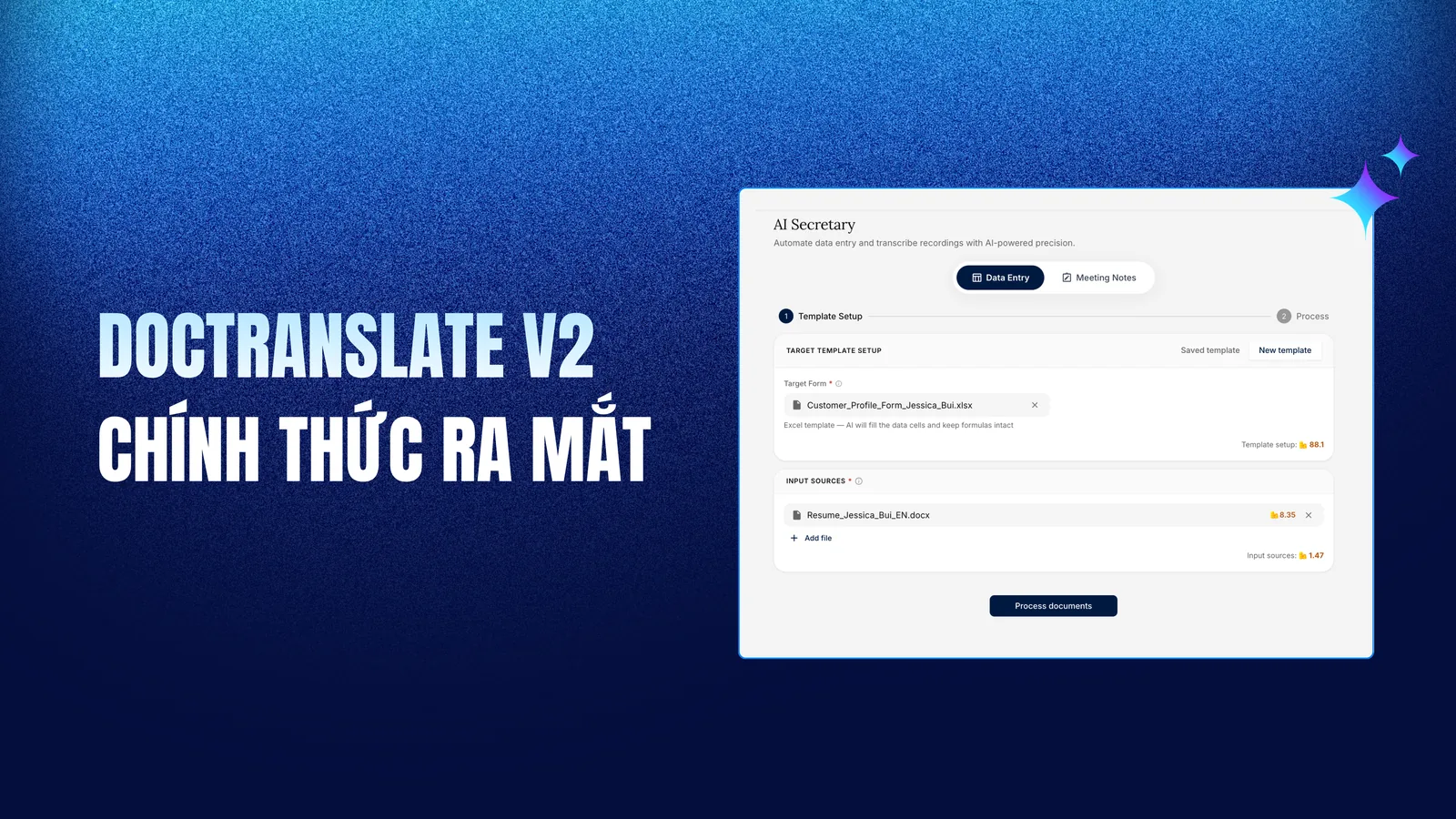
Unlike generic tools that output flat images, Doctranslate.io preserves the underlying structure of advanced file types. For finance teams managing complex formulas in Excel, the translation process keeps all math-heavy cells active and intact. Similarly, for presentation decks, the system retains the structural elements of PPT files, ensuring that slide transitions and object groupings remain functional.
You can review the capabilities at to see how this approach keeps your technical output ready for immediate distribution without needing a secondary design pass.
Executing the Multilingual File Translation Process
The path to high-quality output begins with a secure upload and ends with a ready-to-distribute file. This standardized workflow removes human error from the conversion phase.
Users first log into the secure dashboard and upload their document, whether it is an Excel workbook containing exception notes or a PDF evidence schedule. The system immediately scans the document to map its unique structural layout, headers, and specific formatting requirements. This step is critical because it identifies the container constraints before any linguistic processing begins.
After the upload, teams select the required language pairs and apply specific terminology preferences. Consistency is critical in audit and finance environments; by setting pre-defined glossaries, the AI ensures that terms like "variance," "accrual," or "legal entity" are translated identically across a 500-page document set. This proactive approach significantly reduces the time required for subject matter experts to perform their final technical review.
The system generates the converted file in the exact format of the original. Because the layout-aware AI manages the rendering phase, the resulting document mirrors the source in every aspect, from font weight to alignment. This allows teams to skip the manual reformatting stage and move directly to the final sign-off, ensuring that reports are audit-ready the moment they are downloaded.
Use Cases by Team and Business Asset
Different business units rely on specific file formats that require tailored handling to remain compliant and accurate. Finance teams managing P&L packs frequently handle hundreds of individual documents during a close cycle. Using an AI-driven tool allows them to translate balance-sheet footnotes without losing the integrity of formula-driven cells.
For audit teams, this means that massive evidence schedules, containing thousands of row entries, remain searchable and sortable, allowing auditors to verify figures against original data points with ease.
Legal departments require a high degree of precision when translating multilingual agreements or contract clauses. Any minor shift in formatting could lead to misinterpretations of liability or obligation. By utilizing a platform that preserves the document’s layout, legal counsel can review translated versions side-by-side with the source document, speeding up the confidentiality review cycle while ensuring that all clauses remain legally sound and clearly defined.
Teams dealing with internal exception notes and control narratives often operate on tight deadlines. The ability to process these files immediately, without needing external formatting support, allows operational managers to push through changes to international workflows without waiting for a localization agency to return a finished file. This agility is a significant competitive advantage for global firms that need to stay in sync.
The Bottom Line
Manual document formatting is an outdated practice that consumes valuable time and introduces unnecessary risk to your financial and legal workflows. By shifting to an intelligent, layout-aware AI PDF translator, teams can eliminate the "review tax" associated with manual document cleanup and ensure that complex assets remain audit-ready throughout the entire translation lifecycle. Choosing a solution like Doctranslate.io for your document translation needs enables your team to focus on content quality and strategic review rather than formatting fixes, creating a more scalable and efficient global workflow.
Start with Doctranslate.io Document Translation when the next file needs a reviewed, ready-to-share output.

Discussion
No comments yet