
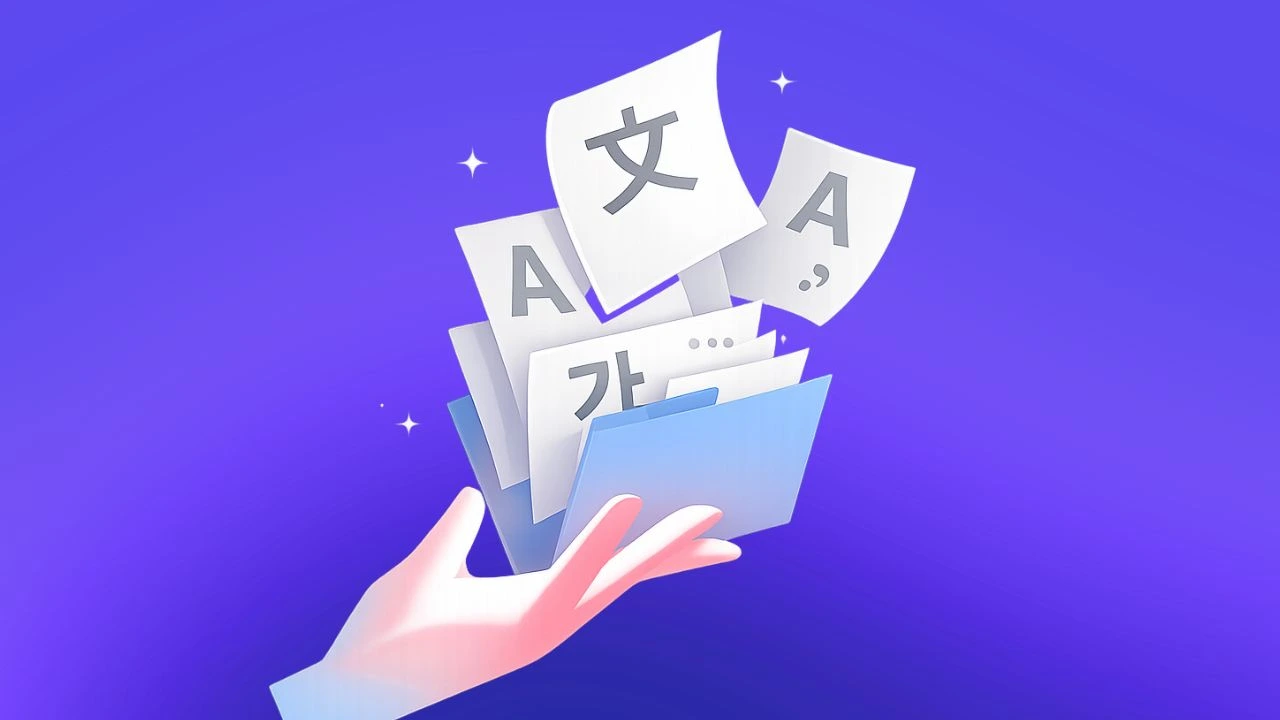
Legal departments frequently face the challenge of extracting actionable intelligence from low-resolution scans and non-editable image files, a process where a single character misread during an OCR translate image text online operation can fundamentally alter the liability of a cross-border contract.
Visual Translation Workflow: Why Legacy Transcription Often Fails
Traditional optical character recognition often treats legal documentation as a flat, uniform stream of data, ignoring the complex, multi-tiered hierarchy found in international agreements. This fragility typically manifests when software fails to interpret tables, margin-based annotations, or the precise alignment of signature blocks required for document validity.
- Destruction of Document Architecture: Standard engines strip away header/footer positioning and clause numbering, forcing human teams to spend hours manually rebuilding the original layout post-extraction. * Loss of Contextual Precision: Legal terminology is highly sensitive to context; legacy tools often process OCR text without regard for the specialized lexicon of maritime, IP, or labor law, resulting in generic word choices that weaken the force of a contract. * Confidentiality Exposures: Public web-based utilities often retain input data for algorithmic "learning" purposes, effectively turning sensitive private filings into training material and violating attorney-client privilege. * Handling of Non-Standard Fonts: Many legacy parsers struggle with the distinct typefaces found in notarized documents or scanned exhibits, leading to errors in names, dates, and fiscal figures.
Essential Requirements for Legal Workflows
Reliable infrastructure must prioritize the preservation of the document’s original visual state while ensuring that every term remains legally defensible throughout the migration process. Counsel requires a system that treats a document not as raw text, but as a structured legal asset where every coordinate matters for the final, certified output.
- Security-First Architecture: The environment must utilize local processing or encrypted, private data silos to ensure that PII and sensitive contract details never intersect with external, public-facing training pools. * Layout Preservation Protocols: Cross-border contract clauses require absolute adherence to original alignment; any movement of text relative to the signature or reference field risks creating an ambiguous or legally unenforceable document. * Terminology Database Integration: A robust system must allow for the application of client-specific glossaries to ensure that terms like "indemnification" or "force majeure" are rendered consistently across every version of a multilingual agreement. * Human-in-the-Loop Approval: The architecture should facilitate an interim state where formatted text is previewed and validated by counsel before it is exported into its final delivery format.
For the practical workflow, ocr translate image text online with Doctranslate.io keeps the source file, target output, and review step in one place.
How Doctranslate.io Reduces Review Cleanup
Doctranslate.io bridges the gap between raw OCR and final, delivery-ready documentation by applying an intelligent parsing layer that maps text to its original location on the page. By visual translation, the system allows legal teams to skip the manual reformatting stage entirely, ensuring that the translated file is functionally identical to the source in its structural components.
- Coordinate-Aware Processing: Unlike flat-file extractors, this system tracks the original bounding boxes of every paragraph, table cell, and footnote, maintaining the visual integrity of the source document so that reviewers can verify the translation side-by-side without guessing at the original context. * Context-Sensitive Legal Dictionaries: The engine leverages a specialized legal terminology database that accounts for jurisdictional nuances, preventing the common issue where generic synonyms dilute the intent of specific regulatory requirements. * Reduced Owner Intervention: By producing a layout-complete output immediately after translation, the platform eliminates the need for junior paralegals to spend hours correcting alignment errors or adjusting font sizes to fit the original formatting. * Reviewer Approval Readiness: Each output is generated with an emphasis on "delivery-ready" quality, meaning the text is ready for submission to courts or opposing counsel with minimal manual verification required.
The Sequence for High-Stakes Document Translation
Translating a 50-page, image-based lease agreement requires a multi-stage approach that balances speed with absolute accuracy. Instead of rushing to a raw machine output, legal teams must verify each stage to ensure the resulting document maintains its evidentiary weight.
- Secure File Intake: The process begins by uploading secure scan images—such as TIFF, PNG, or high-density PDFs—into the platform, where intelligent parsing identifies the structural markers, such as page breaks, clause numbering, and sidebar annotations. 2. OCR and Visual Mapping: The system performs a high-fidelity scan of the image, assigning every character to a persistent coordinate index; this ensures that even complex layouts involving multi-column tables are maintained throughout the transformation process. 3. Legal-Grade Translation Application: The extracted text is then processed through a translation engine tuned specifically for high-stakes legal document management, ensuring that terminology is consistent across all language pairs, such as English to French or German to Mandarin. 4. Layout Synthesis and Export: The final stage involves re-rendering the translated text into the original document shell, ensuring that every element—including signatures and official stamps—is preserved in its exact location to ensure the document remains binding and certified.
Practical Use Cases for Legal Teams
Different types of legal assets present unique challenges, and the capability to handle them effectively determines the efficiency of the entire legal department. When preparing documents for international stakeholders, the ability to handle both text and visual formatting is the primary differentiator between a stalled workflow and a seamless handover.
- Multilingual Agreement Management: When a global contract is updated in one region, the system ensures that all corresponding clauses remain correctly indexed in the secondary language, preventing "drift" between the source and target versions. * Confidential Filing Integrity: For sensitive litigation documents, the platform ensures that metadata and original data integrity are preserved, allowing counsel to submit translated evidence that mirrors the exact structure of the original filing without sacrificing security. * Notarized and Certified Document Prep: AI-driven translation serves as a high-precision draft layer for certified translators; by handling the bulk of the character extraction and layout, the platform allows the certified human professional to focus entirely on the final sign-off rather than mechanical transcription. * Archival Conversion: Turning legacy, image-only discovery boxes into fully searchable, multilingual archives enables counsel to perform rapid keyword searches across massive collections of historical data that were previously locked in image formats.
The Bottom Line
Transitioning from manual OCR transcription to an intelligent visual translation process marks a fundamental shift in how legal teams manage high-stakes documentation. By eliminating the manual cleanup of layout errors and securing sensitive files through private, context-aware processing, teams can move from raw, image-heavy discovery packets to polished, court-ready assets with unprecedented speed. This approach not only recovers hundreds of hours of paralegal time but also adds a layer of consistency and reliability that remains the standard for modern, digital-first legal practice.
Explore how your team can automate this cycle of high-fidelity document management by visiting Doctranslate.io visual translation services to start your next project. Start with Doctranslate.io Visual Translation when the next file needs a reviewed, ready-to-share output.

Discussion
No comments yet