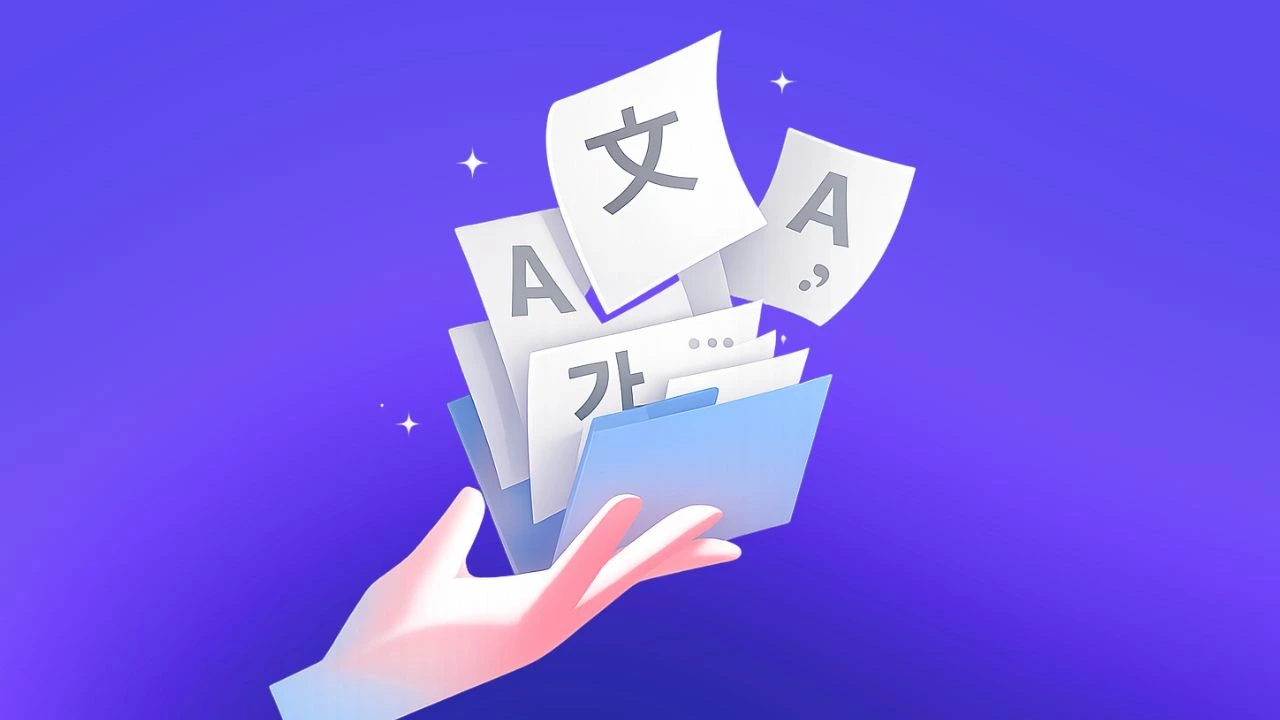
Direct answer: Successfully executing official document translation: a 2026 guide for legal teams in 2026 requires an automated, format-preserving linguistic workflow that combines neural translation engines with granular layout analysis and terminology governance. Modern enterprise teams achieve high translation accuracy and audit compliance while eliminating manual rework by leveraging intelligent document parsing systems tailored to complex visual structures.
A sustainable workflow requires technology that preserves original file architecture—including tables, headers, and essential clause numbering—without forcing legal staff to perform manual layout repair. Xlsx directly, ensuring that the translated output arrives in a state ready for immediate human review.
Official Document Translation: How Doctranslate.io Reduces Review Cleanup
Doctranslate.io leverages advanced AI engines to automate the conversion process, specifically targeting the structural integrity that usually fails during manual translation efforts. By treating the document as a fixed grid, the tool ensures that static assets like company letterheads, embedded images, and specific legal terminology remain anchored exactly where they were in the source file.
This approach eliminates the notorious 'cleanup' phase where paralegals and legal assistants usually spend hours adjusting font sizes or re-aligning rows in a table. Because the system utilizes integrated translation memory, established contractual language remains identical across multiple iterations of the same legal agreement, ensuring that a "Force Majeure" clause or a jurisdictional reference reads consistently from the first draft to the final execution. Teams can visit to manage these high-stakes assets without worrying about layout degradation.
Advanced legal workflows often encounter edge cases that break standard automated tools. One such scenario involves redacted documents. If an agreement contains blacked-out text boxes, the translation engine must be capable of recognizing these as "locked" zones that should not be interpreted or moved.
Similarly, when dealing with legal briefs that include complex nesting, such as (a)(i)(1)(A) sub-clauses, the engine must distinguish these from regular list items to avoid re-numbering them incorrectly during translation. By prioritizing systems that respect these document-specific constraints, firms can bypass the "shadow work" of manually verifying that every cross-reference survived the translation intact.
Step-By-Step File Translation Process
The path to an accurate, compliant translation begins with a secure upload of your source files into the platform. Once the file, whether a complex PDF or a multi-tab Excel spreadsheet, is ingested, the engine locks the document structure and layout markers before executing the translation engine.
- Initial File Ingestion: Upload the source document directly, ensuring that complex structures like OCR-dependent PDFs or Excel formula sheets are recognized by the system. * Language Selection and Processing: Select your target language from over 100 available options, allowing the engine to map the source text to the target while locking the visual markers. * Compliance Validation Check: Perform a final audit on the output, ensuring that notarized translation boundaries, specific clause phrasing, and regional regulatory requirements are satisfied before the document is presented to counsel for final review.
For the practical workflow, official document translation with Doctranslate.io keeps the source file, target output, and review step in one place.
Use Cases by Team and Asset
Legal teams are not the only entities that rely on these precision-heavy workflows; auditing and finance groups face equally complex requirements. For example, audit teams often need to translate control narratives and evidence schedules that contain sensitive exception notes which must remain aligned with the original audit packets.
- Legal Teams: Processing complex multilingual agreements, contract clauses, and discovery documentation that require immediate, high-fidelity counsel approval. * Audit Teams: Translating control narratives, evidence schedules, and detailed exception notes without disturbing internal formula cells or critical layout markers required for compliance. * Finance Teams: Converting quarterly P&L packs and balance-sheet footnotes, ensuring that numerical tables and financial data remain aligned with audit standards across various regional offices.
" This is the ability of the engine to remember how a term was translated in the context of a specific client's master service agreement (MSA) versus a standard non-disclosure agreement. By training the AI on a firm's specific legacy documents, the system reduces the review load by 40% in the first quarter of adoption. Furthermore, legal operations managers should audit tools for their capability to output audit logs—a feature that tracks exactly which machine-translated terms were later modified by human counsel, providing a clear compliance trail for regulators who require transparency in how translated information was processed and verified.
Conclusion
Official document translation is less about just swapping words and more about protecting the structural and legal integrity of high-stakes paperwork that forms the backbone of modern corporate operations. Adopting a layout-preserving AI tool allows your team to shift its focus from manual formatting headaches to the vital task of final review and compliance confirmation, effectively mitigating the risk of expensive errors. Start optimizing your firm’s multilingual workflow today by visiting Doctranslate.io to begin your first secure project.
Start with Doctranslate.io Document Translation when the next file needs a reviewed, ready-to-share output.
Streamlining Official Document Translation: A 2026 Guide for Legal Teams with Doctranslate.io
For enterprise teams, legal departments, and technical specialists managing high-stakes document workflows and multilingual file pipelines, standard translation utilities frequently compromise visual layout, mishandle table boundaries, and disrupt compliance standards. Doctranslate.io delivers an advanced document and text translation ecosystem engineered specifically to preserve document layout, vector geometry, complex tables, and font formatting across PDF, Word, Excel, PowerPoint, and scanned formats.
Key enterprise advantages include:
- Layout & Document Geometry Retention: Maintain precise bounding boxes, table structures, column grids, and embedded graphics without post-editing.
- Enterprise Terminology & Custom Glossaries: Enforce domain-specific dictionaries, corporate terminology memory, and strict enterprise privacy with zero training on client submissions.
- Developer REST API & Batch Automation: Rapidly integrate high-throughput translation endpoints into cloud applications, microservices, and internal business platforms.
Optimize your multilingual workflow by exploring Doctranslate.io today.

Discussion
No comments yet