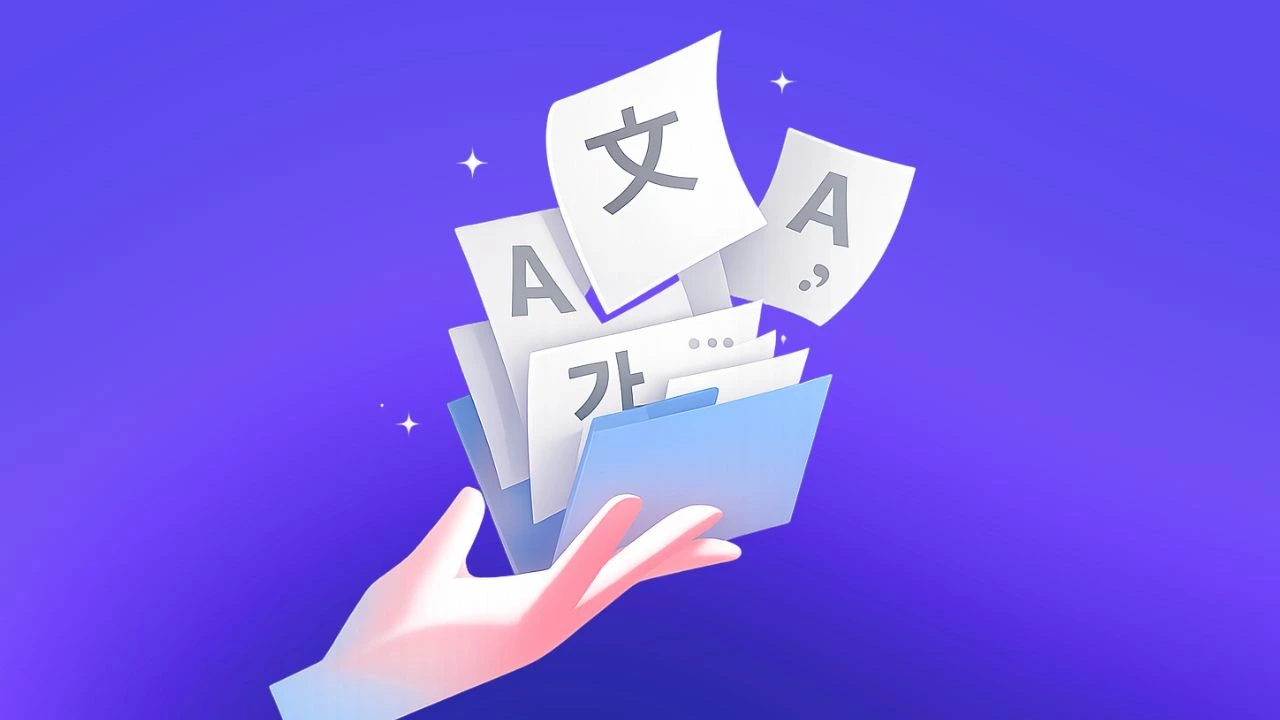
Medical administrative staff frequently encounter Spanish to English Document Translation tasks when managing patient intake forms, clinical research reports, or consent documentation that must be processed for a monolingual English-speaking review team.
Why Medical Teams Need Spanish to English Document Translation
Medical organizations manage a constant stream of cross-border documentation where clarity is synonymous with patient safety. You face the constant risk of information silos when critical patient information or pharmacological data arrives in Spanish-language formats that your primary care or billing teams cannot interpret without professional-grade conversion tools.
Business Risk and Approval Context
Regulatory frameworks, such as HIPAA in the United States or GDPR in Europe, demand that medical documentation remains accurate, legible, and attributable to the correct patient record throughout its entire lifecycle. Any distortion in a translated consent form or a misinterpreted dosage instruction in a discharge summary creates an unacceptable liability for your facility. When your team relies on manual copy-pasting, you introduce human-error vectors that can strip away vital context, leading to delayed approvals and potential audit failures.
Utilizing automated platforms mitigates these risks by creating a standardized, repeatable path for document intake.
Where File Complexity Creates Rework
Complex files often contain nested tables, embedded medical diagrams, and specific column-based layouts that traditional translation approaches frequently break. Pdf medical report into a flat translation field, you often lose the original structural context required for a doctor to quickly scan and verify the information. This creates a technical debt where your staff must manually reformat pages, effectively doubling the time required for every single patient file processed.
| Feature | Manual Translation | Basic Online Tools | Doctranslate.io |
|---|---|---|---|
| Layout Integrity | High (Human effort) | Low (Breaks layout) | High (Preserves structure) |
| File Support | Limited | Single-page text | PDF, Word, Excel, PPT |
| Speed | Slow (Days) | Fast (Seconds) | Fast (Seconds) |
| Data Privacy | High | Low | Enterprise-grade |
Medical Pain Points
You deal with specialized, high-density data that does not react well to standard linguistic processing tools. Managing clinical documentation requires a focus on structural persistence, as even a minor shift in a decimal point or a table column can fundamentally change the meaning of a blood test result or a pharmaceutical prescription.
Format and Number Integrity
The primary challenge in medical translation is that quantitative data is just as important as qualitative text. If your medical document translation solution alters the cell structure of an Excel laboratory results table, your reviewers may misread critical patient metrics. Maintaining the exact positioning of numeric data is essential for clinical decision-making; your software must interpret the document as a layered object rather than a flat string of text.
By utilizing platforms that treat spatial geometry as a core priority, teams avoid the tedious manual cleanup that usually follows an automated file conversion.
Reviewer Ownership and Handoff
When translations are returned in a fragmented, unformatted state, the burden of verification falls heavily on your medical staff. A busy physician or administrative supervisor should not spend their time correcting alignment issues or re-uploading misplaced images within a document. Ensuring that the output is "ready-to-view" allows your specialized team to focus on the content's validity rather than the document's design, streamlining the handoff process from the administrative translation desk to the clinical review board.
For the practical workflow, Spanish to English Document Translation with Doctranslate.io keeps the source file, target output, and review step in one place.
How Document Translation Fits the Medical Workflow
Integrating an automated layer into your document lifecycle allows teams to bridge the language gap without disrupting existing operational procedures. You need a system that acts as a quiet partner in your administrative workflow, allowing staff to drag and drop files and receive immediate, high-fidelity results.
Product Fit for the Core Workflow
pptx presentation decks—into the platform. Because medical documentation is inherently multi-format, having a centralized solution that supports diverse file types ensures that every piece of patient information stays within a single, consistent management path. Once the system identifies the source and target languages, it applies contextual intelligence to the text, ensuring that medical nuances are captured across all file types.
Review Controls Before Delivery
Before you finalize the export of your documents, you maintain the ability to verify that critical headers, forms, and diagnostic charts reflect the original document’s schema. By controlling the quality and layout before the file reaches the end-user, your team reduces the need for back-and-forth communication regarding corrupted files. This level of oversight turns a technical bottleneck into a transparent, audit-ready procedure that supports team accountability.
Real Use Cases in Medical
Medical environments benefit from using translation technology for high-volume, repetitive tasks that require absolute consistency. You might consider applying these tools to scenarios where human review is still the final step but the heavy lifting is handled by software.
High-Value Team Scenarios
- Clinical Trial Patient Information: Translating standardized study materials into multiple local dialects to ensure patient comprehension while keeping the legal documentation consistent with original trial protocols. * Medical Billing and Insurance Records: Converting Spanish-language billing summaries into English to expedite insurance claims processing and internal cost-benefit analysis. * Equipment Manuals: Translating diagnostic hardware instructions to ensure that English-speaking technicians can operate machinery originally documented by international suppliers.
Where Manual Review Still Matters
While automation handles the heavy lifting of language conversion and layout preservation, human oversight remains vital for medical oversight. A native speaker or a subject matter expert should perform a final check on highly sensitive, patient-specific diagnostic notes where regional colloquialisms could occasionally lead to misinterpretation. Automate the structure and the bulk text, but preserve the expert "eyes-on" phase for final medical validation.
ROI for Medical Teams
Investing in an automated translation strategy provides a measurable return by reducing the administrative overhead associated with manual documentation. You can effectively reclaim dozens of hours each month by removing the necessity for manual formatting and re-entry of clinical data.
Time Savings and Cleanup Reduction
The most significant drain on resources in any clinical setting is the cleanup phase that follows a poorly handled file translation. By choosing tools that preserve the native file structure, you eliminate the need to re-align images or fix broken tables. This allows your administrative staff to dedicate their time to patient care coordination rather than digital housekeeping.
Budget Impact and Review Effort
When you centralize translation, you reduce the need for outsourced vendors or expensive manual services for routine documentation. The budget is better spent on enterprise-level automated platforms that offer the scale needed for modern medical facilities. A lower review effort per document means faster turnaround times, allowing your organization to scale its service volume without proportionally increasing its administrative staff.
The Bottom Line
Spanish to English Document Translation for medical teams is no longer a hurdle if you integrate the right tools into your existing administrative flow. By focusing on maintaining the structural and numeric integrity of your files, you minimize risk and significantly accelerate your clinical documentation turnaround. To see how your team can save hours of formatting time every week, explore doctranslate.io document translation and integrate a more efficient solution today.
Start with Doctranslate.io Document Translation when the next file needs a reviewed, ready-to-share output.

Discussion
No comments yet